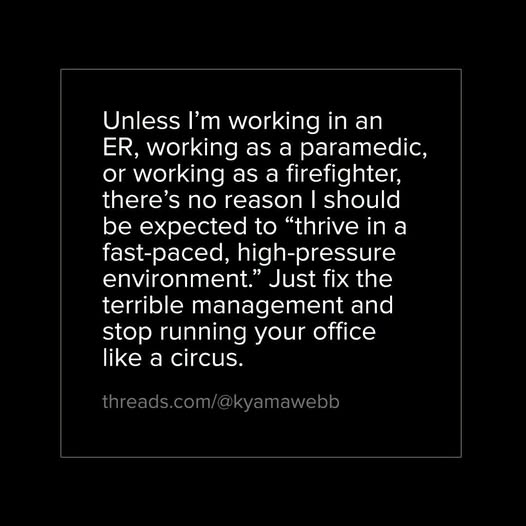
In the age of social media, where workplace culture and mental health conversations are increasingly visible, a recent viral post has sparked a spirited debate about expectations surrounding high-pressure jobs. The post, featuring a simple yet provocative statement—”Unless I’m working in an ER, working as a paramedic, or working as a firefighter, there’s no reason I should be expected to ‘thrive in a fast-paced, high-pressure environment'”—has resonated with many and infuriated others.
At its core, the statement calls into question the pervasive narrative that employees outside critical emergency roles “should” be able to thrive under intense stress and relentless deadlines. While emergency responders such as ER doctors, paramedics, and firefighters are often lauded for their resilience and dedication, others argue that this expectation unfairly extends the same high-pressure standards across industries where such conditions are not part of daily reality.
Critics of the current workplace culture say this post highlights a problematic trend: the normalization of burnout as a workplace rite of passage. For years, many companies have glorified the idea that ‘working hard’ and enduring stress are signs of commitment and passion. However, mental health advocates warn that expecting employees in every sector to operate under the same stressful conditions risks normalizing burnout, anxiety, and depression.
Supporters of the message point out that jobs should be assessed and valued based on their specific demands, and that workers deserve environments suited to their roles rather than an unrealistic universal standard. “Not everyone is cut out for hyper-stressful roles, and that’s okay,” says Dr. Linda Marks, a workplace psychologist. “The expectation that everyone should thrive in chaos diminishes the importance of work-life balance and mental health.”
However, critics argue that the post may oversimplify the complex nature of workplace stress, potentially alienating those in demanding fields who believe that resilience can be cultivated and expectations should be higher across the board. Experts emphasize that fostering a healthy work environment involves understanding individual limits and providing support, not necessarily lowering standards.
In response to the viral debate, some organizations are reevaluating their workplace cultures to promote flexibility, mental health resources, and realistic expectations. Conversations prompted by the social media post are part of a larger movement advocating for a more nuanced understanding of stress, performance, and human capacity.
Ultimately, this viral conversation underscores the importance of recognizing diversity in job roles and acknowledging that everyone’s threshold for stress differs. As workplaces continue to evolve, the push for healthier, more sustainable environments seems more critical than ever.
Where to Learn More
- Workplace Stress and Mental Health: What Employers Need to Know – The Washington Post
- Why Burnout Isn’t a Moral Failure — And How to Prevent It – Psych Central
- Creating Healthier Work Cultures in a Post-Pandemic World – Harvard Business Review
- Work Stress – American Psychological Association