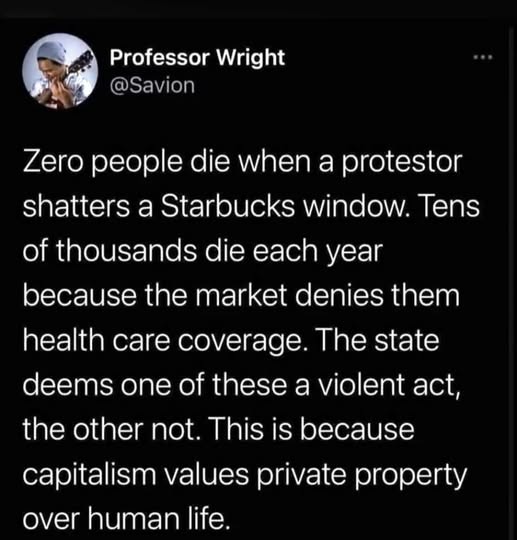
A recent social media post has ignited a fiery debate about the hypocrisies and overlooked realities of social justice struggles in modern society. An image featuring the quote, “People die when a protester shatters a Starbucks window. Tens of thousands die each year because the market denies them healthcare,” has gone viral, prompting widespread discussions about the true cost of activism and systemic neglect.
The statement juxtaposes two seemingly unrelated issues: acts of property damage during protests and the grim toll of healthcare disparities. It questions societal priorities, suggesting that while some view vandalism as destructive and morally wrong, others overlook the far more devastating consequences of systemic negligence that result in countless deaths each year.
Many social commentators argue that this post sheds light on a disturbing double standard. The initial focus on property damage tends to overshadow the ongoing human toll caused by economic and political policies. According to estimates, tens of thousands of Americans die annually due to lack of access to adequate healthcare—a tragic figure that often remains in the shadows of public discourse.
Healthcare inequity in the United States has long been a contentious issue. Experts point out that systemic barriers—including high costs, insurance denial, and lack of coverage—contribute significantly to preventable deaths. Groups like the National Institute on Minority Health and Health Disparities highlight how marginalized communities are disproportionately affected, facing higher mortality rates from preventable conditions.
The social media post also highlights a broader critique: society often reacts strongly to acts of protest that involve property damage, framing them as violations of law and order. Meanwhile, systemic issues—like inadequate healthcare—are dismissed as slow-moving crises that don’t garner immediate outrage, despite their devastating human cost.
This message leads to a provocative question: Is the societal outrage misplaced? Should we channel more activism and resources toward addressing the root causes of poverty, inequality, and healthcare access? Critics argue that addressing these systemic issues requires sustained efforts beyond symbolic protests, including policy reforms and changes in economic priorities.
The viral nature of the post underscores a growing public consciousness about the importance of systemic change. It compels activists, policymakers, and citizens alike to reflect on what constitutes violence and harm, challenging us to think beyond individual acts of vandalism toward the broader societal impacts that often go unrecognized.
As the discourse continues, one thing remains clear: the true cost of injustice might not be apparent in shattered glass, but in the preventable deaths that occur silently each year, perpetuated by structural inequality and neglect.