
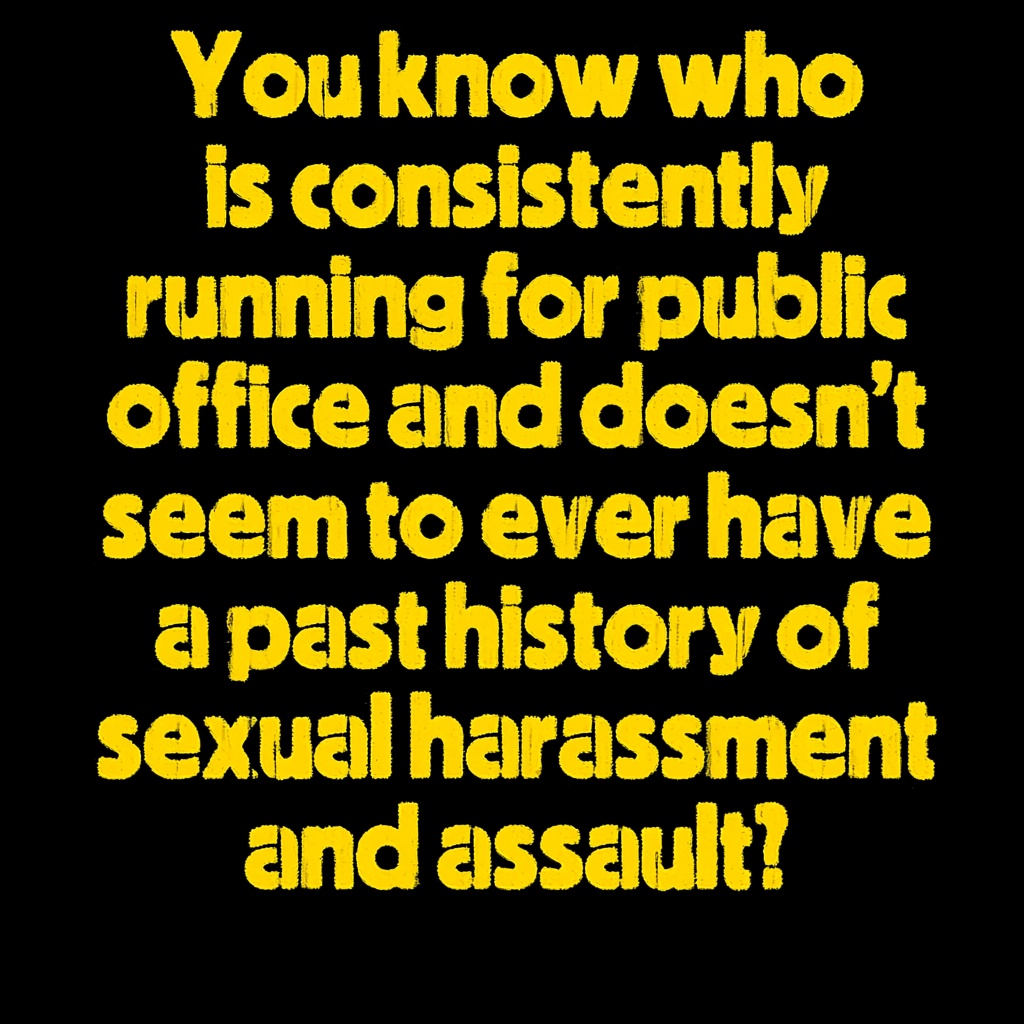
In recent days, a provocative social media post has ignited a broader discussion about gender, integrity, and political leadership. An image displaying the words “You know who is consistently running for public office and doesn’t seem to ever have a past history of sexual harassment and assault? Women.” has gained significant traction across platforms, prompting many to reflect on the longstanding gender disparities within political arenas.
At the core of this viral message is a pointed critique of how women in politics are often scrutinized differently than their male counterparts. While many male politicians have faced allegations or scandals related to misconduct, the post suggests that women seeking or holding office have demonstrated resilience and integrity, often without the baggage of legal or ethical scandals. This raises questions about the double standards women face and whether they are held to higher moral standards or simply scrutinized more intensely when scandals arise.
The social media reaction has been mixed. Supporters argue that the post highlights the integrity and perseverance women bring into political life, often under immense pressure and scrutiny. They point out that women who run for office do so despite societal barriers and often without the complex web of scandals that have marred many male politicians’ careers.
Conversely, critics contend that such statements risk oversimplifying a complex issue. They emphasize that allegations of misconduct are a part of political discourse across all genders and that the focus should be on how to improve accountability and transparency in politics, rather than making gender-based generalizations. Moreover, some argue that perpetuating the idea that “women are scandal-free” can inadvertently uphold stereotypes that undermine the challenges women face in breaking glass ceilings, including harassment and discrimination.
Nevertheless, the conversation underscores a broader cultural reflection: representation matters. Women have historically been underrepresented in government and leadership roles, and their persistent efforts to run for office contribute to the gradual shift in political norms. Many believe that comparative scandals can be a distraction from the real issue—ensuring qualified, ethical leadership regardless of gender.
Experts suggest that promoting transparency, fostering respectful political discourse, and supporting women candidates can help create a healthier political environment where integrity is valued above all. As more women continue to enter public office, societal perception may evolve, further breaking down stereotypes and encouraging diverse leadership.
In the end, the viral social media message serves as both a rallying cry and a reminder—women in politics often carry the burden of high expectations but also demonstrate ongoing resilience in the face of adversity. Their presence and perseverance challenge outdated narratives, paving the way for a more inclusive and ethical political landscape.
Where to Learn More
- Women in Politics: Breaking Barriers and Building Futures – GenderWatch
- The Rise of Women Candidates in U.S. Politics – Politico
- Ethics and Accountability: Women in Political Leadership – NPR
- Gender and Political Integrity: An Analysis – The Guardian
- Women in Government: Challenges and Achievements – CNN