
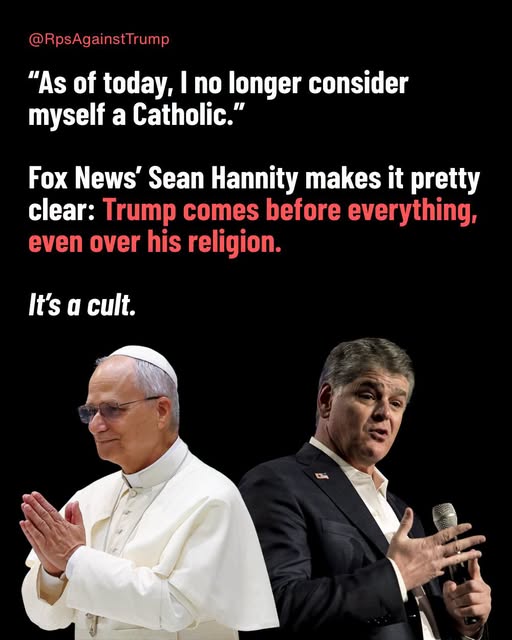
A recent viral social media post has ignited a fierce conversation about faith, loyalty, and the current political climate. An anonymous Twitter user known as @RpsAgainstTrump shared a stark statement that has captivated online audiences: “As of today, I no longer consider myself a Catholic.”
The post quickly gathered thousands of reactions, with many questioning what might have prompted such a declaration, especially from someone choosing to publicly distance themselves from their faith. However, what made this statement even more attention-grabbing was an accompanying claim about Fox News personality Sean Hannity. According to the post, Hannity made a pointed remark implying that then-President Donald Trump’s influence supersedes religious principles.
Specifically, the message suggests that Hannity’s statements reflected a prioritization of political loyalty over spiritual beliefs, with the assertion that “Trump comes before everything, even over his rel[igion].” While this direct quote has not been independently verified, it echoes broader criticisms that some have made regarding media personalities and their perceived alignment with Trump’s political agenda regardless of personal or moral considerations.
Social media users are divided on the implications of this post. Some see it as a sign of disillusionment among supporters who feel betrayed by political figures perceived to sideline core values. Others argue that such statements are politically motivated and that the relationship between faith and politics remains complex and deeply personal.
Experts in religious studies and political analysis suggest that this controversy underscores a growing trend of individuals reassessing their religious identities in light of political allegiance. It also raises questions about the influence of media figures like Hannity, who often serve as intermediaries between political narratives and the public.
While the original post is shrouded in anonymity, the conversation it has sparked highlights a wider societal debate. For many, faith is a guiding principle, and when political loyalty appears to overshadow it, questions about authenticity and moral compass become unavoidable. Conversely, others see loyalty to political figures like Trump as an extension of ideological belief, regardless of religious convictions.
As the debate continues online and in media circles, one thing remains clear: the intertwining of faith and politics remains a deeply polarizing issue, triggering passionate discussions about where loyalty truly lies in today’s fractured political landscape.
Where to Learn More
- Faith and Politics in the Age of Trump – Politico
- Religious Identity Faces Tests Amid Political Divides – The Washington Post
- How Trump’s Politics Are Changing Religious Affiliations – NPR
- Analysis: Hannity’s Alleged Remarks and the Faith-Loyalty Debate – Los Angeles Times