
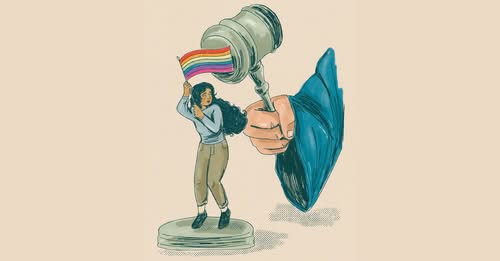
In the wake of the Supreme Court’s landmark decision in Dobbs v. Jackson Women’s Health Organization, which effectively overturned federal abortion rights, advocates feared that other essential civil rights—most notably the landmark Obergefell v. Hodges decision legalizing same-sex marriage—would be next in the crosshairs of a polarized, far-right movement. However, recent shifts suggest that conservative strategists are pivoting toward even more vulnerable targets, reshaping the landscape of civil rights battles in the United States.
Since Dobbs was announced last June, progressive activists have been bracing for a wave of judicial and legislative attacks on LGBTQ+ rights, contraception access, and other societal protections established over decades. Obergefell, which guaranteed the constitutional right to same-sex marriage, was widely considered a prime target for curtailment by conservative legal actors intent on reversing or undermining LGBTQ+ equality.
Yet, instead of immediately attacking Obergefell, many far-right policymakers and legal strategists appear to be shifting their focus toward even more fragile and contentious issues. Some are turning to efforts that threaten to dismantle established protections for marginalized communities—particularly those vulnerable to religious exemptions, anti-LGBTQ+ legislation, and immigrant rights.
A notable example is the rising push by conservative states to pass laws that allow **religious refusal**—bills that permit healthcare providers, employers, or service providers to deny services to LGBTQ+ individuals on religious grounds. These laws pose significant challenges to anti-discrimination statutes and could serve as footpaths to eroding Obergefell’s protections in practice.
Additionally, legal experts note that the so-called “culture wars” are shifting toward issues surrounding **transgender rights**, particularly access to gender-affirming healthcare for minors. Several states have enacted or proposed legislation that criminalizes or restricts such care, heightening the vulnerability of transgender youth and their families.
This strategic pivot is partly driven by the recognition that directly overturning Obergefell is legally complex and potentially divisive. Instead, the far right seems to be employing a tactic of “incremental erosion”—attacking the infrastructure that supports equality, rather than dismantling it outright.
Say experts, the focus on vulnerable fronts like religious exemptions and transgender rights reflects a deliberate attempt to chip away at the societal consensus that underpins civil rights advancements. This approach allows legal and legislative battles to unfold incrementally, often with less immediate backlash, but with potentially devastating long-term consequences.
As the fight continues, advocates remain vigilant. They stress that defending Obergefell and other civil rights protections will require not only legal resistance but also active public engagement to uphold the principles of equality and fairness.