
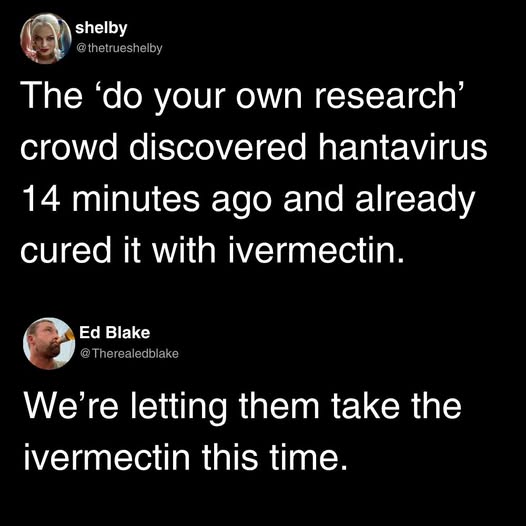
Amid the ongoing flood of health misinformation on social media, a recent post has taken the internet by storm—claiming that a reckless “do your own research” crowd managed to supposedly identify and cure hantavirus within just 14 minutes, all using ivermectin. The viral comment, shared by user @thetrueshelby, read: “The ‘do your own research’ crowd discovered hantavirus 14 minutes ago and already cured it with ivermectin.”
The statement quickly gained traction among viewers skeptical of mainstream medical advice, fueling conspiracy theories and unsubstantiated claims that ivermectin—a drug originally approved for parasitic infections—is a miracle cure for viral diseases like hantavirus. The post’s rapid spread underscores the concerning trend of health misinformation diffusing unchecked across social media platforms, often leading to dangerous misconceptions about effective treatments.
But what does the science really say? Hantavirus is a severe and sometimes deadly virus transmitted typically through contact with rodent droppings, urine, or bites. It requires prompt medical attention, including supportive care and, in some cases, antiviral medications. The notion that ivermectin, which has been controversial and widely debated during the COVID-19 pandemic, can cure such a complex virus within minutes is without basis in current scientific evidence.
Health experts emphasize that **”self-diagnosis and self-medication based on social media claims can be extremely dangerous.”** The Centers for Disease Control and Prevention (CDC) explicitly advise against the use of ivermectin outside of controlled medical settings. Moreover, the idea that a cure was discovered and implemented so rapidly is a clear sign of misinformation and hyperbole designed to sensationalize discussions around health and disease.
Experts warn that spreading such unfounded claims can lead individuals to delay proper medical treatment, potentially increasing morbidity and mortality rates. Authorities and health organizations continue to emphasize evidence-based practices—vaccination, proper hygiene, and seeking professional medical advice when dealing with infectious diseases.
While social media can be a valuable platform for sharing knowledge, it underscores the importance of verifying information from trusted sources. As viral as these claims are, they remind us of the ongoing need for digital literacy and skepticism towards quick-fix solutions promoted online.