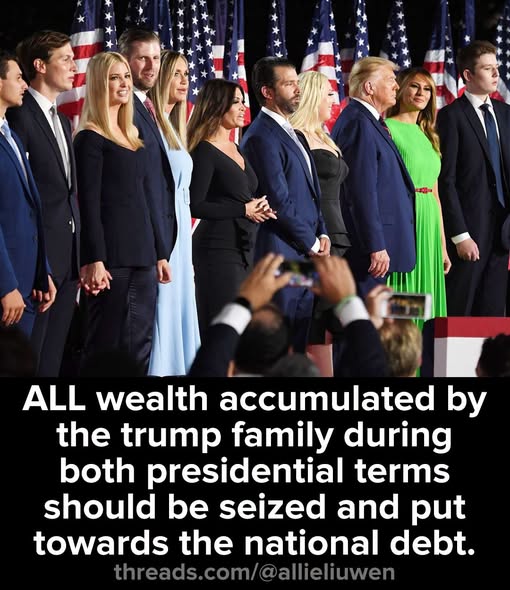
In a viral social media post gaining widespread attention, a provocative call has emerged advocating for the seizure of wealth accumulated by the Trump family during Donald Trump’s two presidential terms. The message, accompanied by an image of bold text stating “ALL wealth accumulated by the Trump family during both presidential terms should be seized and put towards the national debt,” has sparked heated debate across online platforms.
The post, shared via threads.com by user @alieliuwen, has attracted thousands of likes, shares, and comments, with supporters arguing that the Trump family’s financial gains during his presidency warrant reallocation to benefit the American public. Critics, however, dismiss the idea as overly simplistic, raising questions about legality, due process, and the legal precedents necessary for such a measure.
Historically, the concept of seizing assets of political figures or their families is complex and often controversial. Legal experts emphasize that asset confiscation typically requires a court ruling, usually tied to criminal activity or fraud, and cannot be implemented simply based on political opinions or accumulated wealth. Nonetheless, the viral message taps into ongoing discussions about economic inequality, presidential ethics, and accountability.
During Donald Trump’s presidency, questions about his personal finances and potential conflicts of interest frequently dominated headlines. Critics argued that certain business dealings and financial gains during his term might have benefited him personally, leading some to suggest that assets could be subject to investigation or seizure if links to illegal activities are established. However, as of now, there is no concrete legal basis or official proposal to seize the Trump family’s wealth specifically tied to his time in office.
The social media movement highlights broader frustrations surrounding income inequality and the perceived immunity of the wealthy, especially political elites, from accountability. Advocates argue that redirecting such wealth could significantly assist in addressing issues like national debt, infrastructure deficits, and social programs.
Experts remind users to approach such claims critically, emphasizing the importance of legal procedures and due process. While the sentiment resonates with many who feel the system favors the wealthy, any actual effort to seize assets would require extensive legal action and bipartisan support.
As this viral campaign continues to circulate, it underscores a growing tendency among the public to scrutinize and question the financial dealings of political figures. Whether or not such a seizure could actually occur remains uncertain, but the conversation about wealth, accountability, and national debt is clearly sparking renewed debate across social and political spheres.