The recent hospitalization of U.S. Senator Mitch McConnell has reignited ongoing discussions about the limitations and vulnerabilities of congressional representation. A social media post highlighting his absence has gone viral, prompting Americans to reflect on what it means when elected officials face health issues that temporarily or permanently remove them from office.
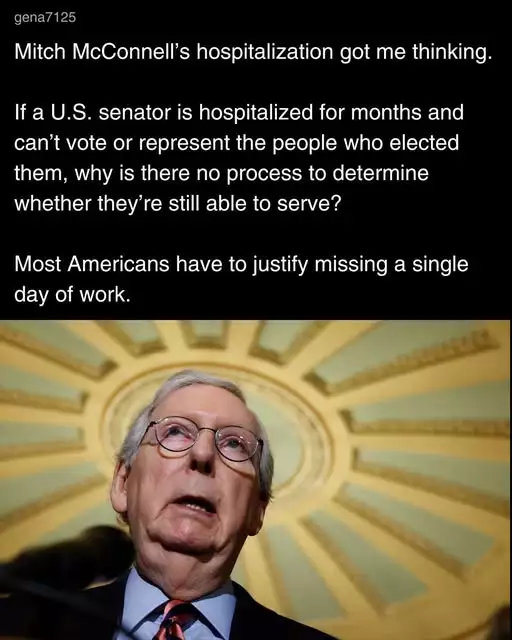
The post by user gena7125 succinctly captures the concern: “If Mitch McConnell’s hospitalization got me thinking, thinking for months and U.S. senator is hospitalized, can’t vote or represent the people.” This sentiment resonates across many communities, emphasizing the critical role senators and representatives play in shaping legislation and voicing constituents’ needs. It also raises questions about how the U.S. government manages situations when key lawmakers are unable to perform their duties.
Senator McConnell, the Senate Minority Leader, has been a central figure in American politics for decades. His current health issues, which led to his hospitalization, have temporarily sidelined him, causing a ripple effect in the legislative process, especially with tightly divided votes. Such absences underscore a larger systemic issue: the potential for legislative gridlock when key lawmakers are incapacitated or otherwise unable to participate.
Political analysts point out that while the U.S. Constitution provides mechanisms for replacing senators through special elections or appointments, these processes can take weeks or even months, depending on the state. During this interim period, constituents are left without direct representation in crucial decisions. The situation raises a broader question: should there be measures to ensure continuous representation, especially in closely divided chambers where every vote counts?
Furthermore, health-related absences highlight the importance of succession planning and the role of temporary replacements. In some states, governors can appoint interim senators, but the process varies widely across the country. Critics argue that these systems need reform to ensure stability and continuous representation—particularly in critical periods like Supreme Court nominations, budget negotiations, or national emergencies.
This viral post also prompts a reflection on the health and longevity of political figures who often face immense stress and demanding schedules. Ensuring that lawmakers can continue their duties or have proper succession plans is essential, not only for democratic integrity but also for the effective functioning of government institutions.
As the nation watches Senator McConnell’s recovery, many are contemplating whether the current structural arrangements in Congress are sufficient to handle such situations smoothly. Some experts recommend reforms that would enable more seamless transitions and limit the impact of health crises on national governance.
In the end, the social media community’s reaction underscores a vital point: elected officials’ health and ability to serve are fundamental to a thriving democracy. Citizens are increasingly aware and vocal about their expectations for a resilient, transparent, and accountable government capable of weathering personal health setbacks of its leaders.