
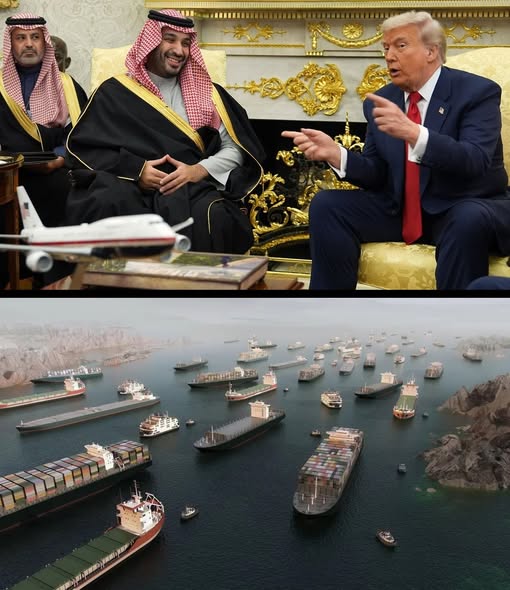
In a surprising turn of events, Saudi Arabia—once regarded as one of former President Donald Trump’s closest allies in the Middle East—appears to be distancing itself from recent U.S. military initiatives. This shift comes amid the announcement of Trump’s new naval operation, “Project Freedom,” designed to escort commercial ships through the Iran-blockaded Strait of Hormuz. What was initially perceived as a calculated effort to tighten U.S. military pressure on Iran is now revealing cracks in longstanding regional alliances.
Trump announced “Project Freedom” on Truth Social, detailing a plan to protect merchant vessels from Iranian interference. However, the move has rattled Gulf Cooperation Council (GCC) nations, especially Saudi Arabia. In response, Riyadh swiftly suspended U.S. military access to its bases and airspace—an unprecedented signal of displeasure. A subsequent phone call between Trump and Crown Prince Mohammed bin Salman (MBS) failed to resolve the issue, underscoring the growing disconnect between the U.S. and its once-trusted Gulf partners.
Adding to the diplomatic surprise, allied nations Qatar, Oman, and Kuwait—who were not consulted beforehand—found themselves caught off guard. According to reports, Trump did not even inform Qatar’s emir until after the operation had already begun. Similarly, Oman was left in the dark until after the announcement, raising questions about the level of coordination and trust within the region. This unilateral approach comes even as the broader geopolitical landscape in the Middle East remains volatile, with the U.S. and Iran engaged in a tense ceasefire that sees occasional military skirmishes despite official claims of stability.
The backdrop to this diplomatic upheaval is notable. Over the years, Saudi Arabia and the Gulf states have been key partners for the U.S., hosting military bases and sharing intelligence crucial for regional security. Yet, recent actions suggest they’re recalibrating their relationships. The pivot is at least partly driven by frustration over perceived lack of U.S. consultation and inconsistent policies, echoing a broader pattern of Western allies pushing back against what they see as unpredictable U.S. leadership.
This diplomatic rift echoes a familiar pattern that Trump displayed elsewhere. His tenure was characterized by strained relations with traditional allies—alienating Canada, challenging NATO allies, and encouraging Europe to move toward greater independence. Now, the same playbook appears to be unfolding in the Middle East. The Gulf states have begun quietly blocking airspace, pulling back funding—most notably, Saudi Arabia has withdrawn its funding from LIV Golf, a Trump-backed sports diplomacy initiative that had bolstered U.S.-Saudi ties. Despite LIV Golf hosting events at Trump properties, the fallout indicates a significant cooling of the once-cozy relationship.
Analysts warn that this unraveling alliance could have far-reaching consequences. The Gulf countries’ hands-on approach—through blocked communications and withdrawal of support—signals a desire for autonomy and a reluctance to be passive players in Washington’s strategic calculus. Meanwhile, Europe has voiced its concern openly, but the Gulf states’ silent rebuke could be even more impactful, hinting at a shifting power dynamic that Washington might find hard to reverse.
As regional alliances fracture and the U.S. faces diplomatic pushback from nations it once considered essential partners, the question remains: how will this reshape the Middle East’s geopolitical landscape—and what does it mean for U.S. influence in the region? With “Project Freedom” underway amid these mounting tensions, the coming weeks will be crucial in testing the durability of longstanding alliances and the Biden administration’s efforts to restore trust.
Where to Learn More
- Saudi Arabia Suspends U.S. Military Access Amid Rising Tensions – Reuters
- Saudi Arabia and U.S. Relations Strain Over Iran and Policy Disputes – BBC News
- Analysis: How Trump’s “Project Freedom” Fractured Gulf Alliances and What It Means – CNN
- US and Iran Ceasefire Tensions Amid Gulf Backlash – The Wall Street Journal