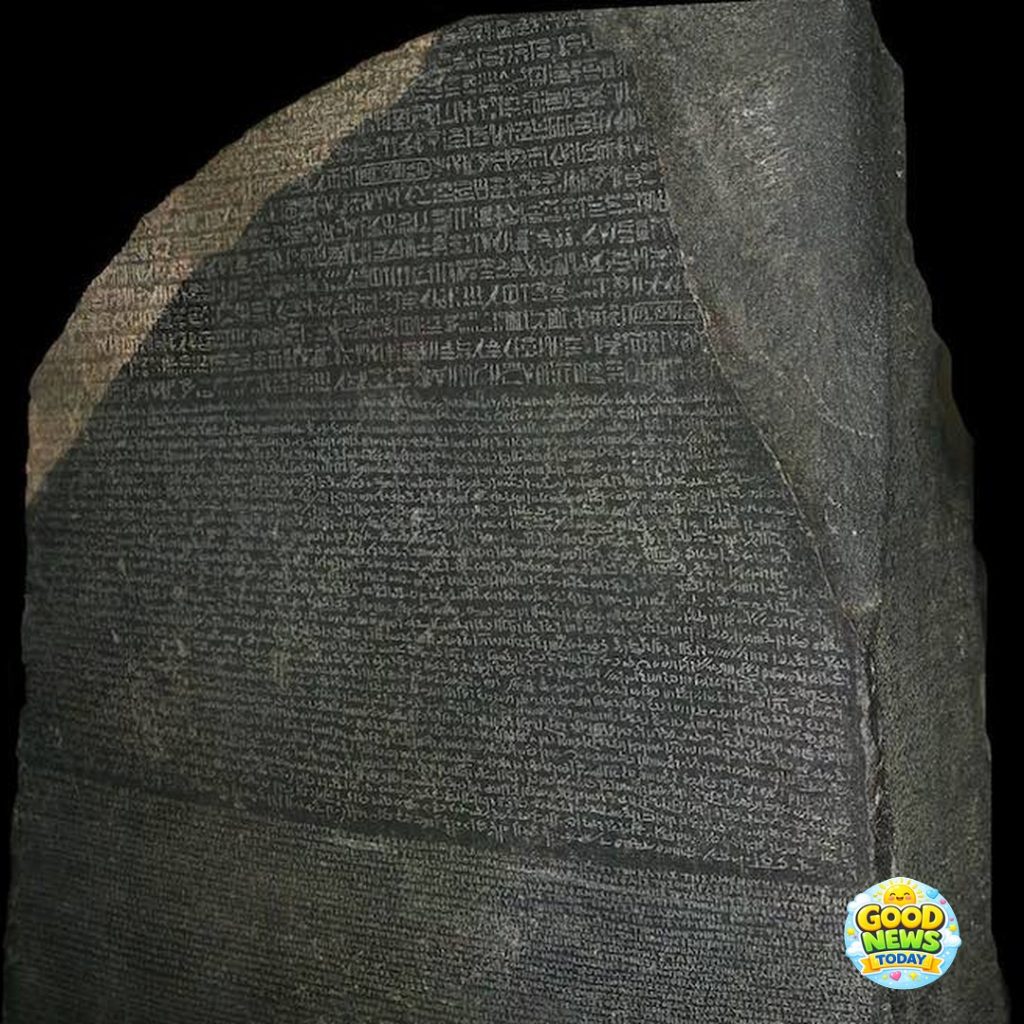
Two thousand two hundred twenty-two years ago, the Decree of Memphis was etched into black sandstone blocks across Ptolemaic Egypt, marking the reign of King Ptolemy V. This remarkable decree was inscribed in three languages: Egyptian hieroglyphics, Demotic script, and ancient Greek. Today, this iconic artifact is widely recognized as the “Rosetta Stone,” a crucial key that unlocked the mysteries of Egyptian hieroglyphics found on ancient temples, coffins, and various artifacts, allowing us to delve into the rich history of this extraordinary civilization. (196 BCE)
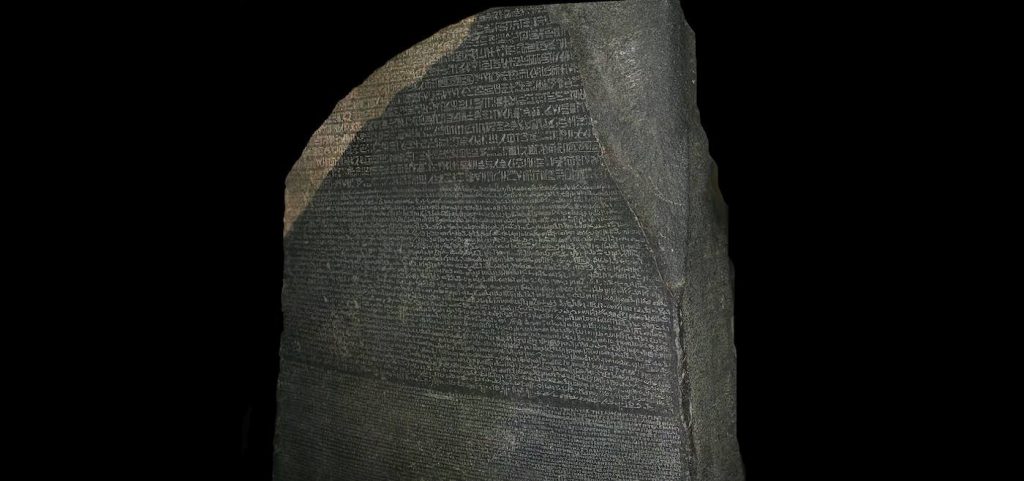
The stone was discovered in July 1799 by French officer Pierre-François Bouchard during Napoleon’s campaign in Egypt. Following the defeat of French forces, it was transported to the British Museum in 1802 after Great Britain took control of Alexandria.
Research on the decree commenced soon after its discovery, with the first complete translation of the Greek text published in 1803. It wasn’t until 1822 that Jean-François Champollion revealed his transliteration of the Egyptian scripts in Paris. Scholars continued to work diligently for years before they could confidently read Ancient Egyptian inscriptions and literature.
This significant text not only confirms the worship of Ptolemy V within a royal cult but also addresses a rebellion related to the treatment of native Egyptians by the Ptolemaic dynasty, which had its roots in Hellenistic conquest.
Today, the term “Rosetta Stone” has transcended its original context, symbolizing a vital clue that leads to new realms of knowledge.
More Good News on This Date:
Seventy-eight years ago, just 11 days after her release from prison, jazz legend Billie Holiday graced the stage of Carnegie Hall in New York City for a sold-out performance. Initially hesitant about making a comeback after her recent arrest, she ultimately decided to take the stage. In a remarkable feat, 2,700 tickets were sold in advance, setting a record for the venue at that time.

Holiday had been arrested in May 1947 for narcotics possession and faced significant challenges during her legal proceedings. Despite these hurdles, she emerged from Alderson Federal Prison Camp less than a year later on good behavior. During her triumphant Carnegie concert, she performed 32 songs, including classics like Cole Porter’s “Night and Day” and her powerful hit “Strange Fruit.” A delightful surprise came when she received a box of gardenias, her signature flower. Without hesitation, she pinned them to her hair, adding a touch of glamour to her performance.

However, after an exhilarating show and numerous curtain calls, the excitement took its toll, and she fainted from blood loss after the third bow. (1948)
Additionally, on this date, 114 years ago, the first of 3,000 beautiful Japanese cherry blossom trees was planted in Washington, D.C. This generous gift came from Tokyo’s Mayor, Yukio Ozaki, symbolizing friendship and cultural exchange between the two nations.