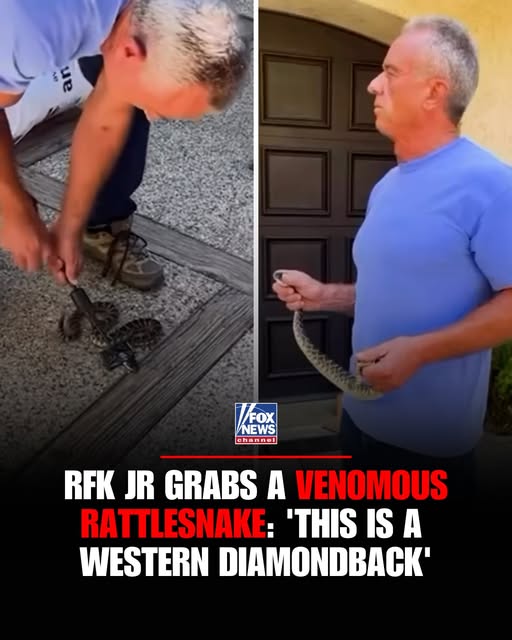
In a surprising display of bravery and nimbleness, Robert F. Kennedy Jr. recently shared a video showcasing his encounter with one of North America’s most dangerous snakes. After gaining attention for an earlier incident involving black racer snakes, Kennedy took his wildlife handling skills to a new level by capturing a venomous Western diamondback rattlesnake found in a suburban driveway.
The video, posted on social media, shows Kennedy carefully approaching the snake, which is known for its potent venom and distinctive rattle. With a steady hand, he gently grips the creature, expressing clear caution but also confidence in his handling technique. “His fangs are in there. I don’t want to touch them,” Kennedy comments, emphasizing his respect for the animal’s danger while ensuring it’s safely contained.
To assist in relocating the snake, Kennedy called upon the help of his wife, actress Cheryl Hines, who appears in the clip holding a pillowcase. This simple yet effective tool allows them to transport the rattlesnake safely back into the wild, away from residential areas and potential human encounters.
The ordeal highlights Kennedy’s commitment to wildlife conservation and his willingness to engage directly with nature—an activity that has both fascinated and alarmed social media users worldwide. Many viewers expressed admiration for his calm demeanor and respect for the dangerous reptile, while others raised concerns about the risks involved in handling venomous snakes.
Western diamondback rattlesnakes (Crotalus atrox) are native to the southwestern United States and known for their potent venom, which can cause serious harm if not treated promptly. They are vital to their ecosystems as a control on rodent populations, but encounters with humans can be deadly if mishandled or provoked.
Kennedy’s latest snake rescue appears to be part of a broader effort to promote coexistence with native wildlife rather than fear or eradication. His willingness to share these personal experiences has garnered both praise and critique from the online community, sparking a larger conversation about safety, conservation, and the importance of understanding local ecosystems.