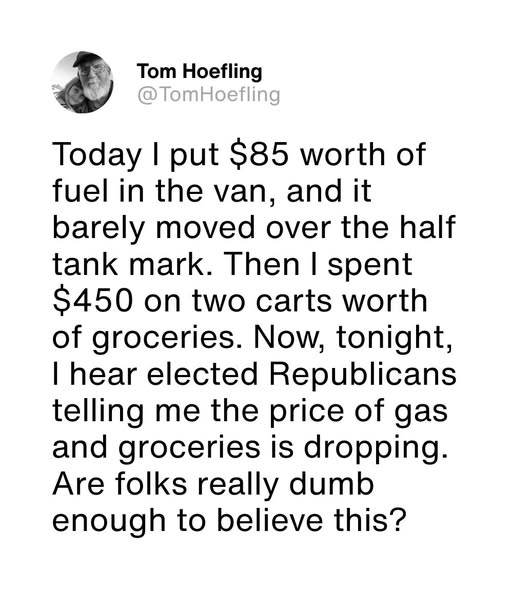
In a candid social media post that quickly went viral, Tom Hoefling highlighted the stark realities many Americans are facing as inflation continues to drive up the costs of everyday essentials. Hoefling shared a snapshot of his recent expenditure, revealing how spiraling prices are impacting household budgets in unprecedented ways.
“Today I put $85 worth of fuel in the van, and it barely moved over the half tank mark. Then I spent $450 on two carts worth of groceries,” Hoefling wrote, poignantly illustrating the disproportionate rise in costs that many consumers are experiencing. What once might have been a routine fill-up or grocery run now leaves shoppers questioning the sustainability of their spending habits.
Fuel price increases are largely driven by global geopolitical tensions, supply chain disruptions, and fluctuating oil prices. According to recent data from the U.S. Energy Information Administration, the national average for gasoline has hit levels not seen in recent years, pushing average drivers to spend significantly more for each fill-up. Many consumers report that filling up their vehicles now costs upwards of $80 to $100, a substantial jump from previous years.
Coupled with soaring grocery bills, the harsh reality for many American households becomes painfully clear. The United States Department of Agriculture notes that food prices are escalating at their fastest pace in over four decades, with staples such as meat, dairy, and produce experiencing double-digit percentage increases.
Experienced consumers like Hoefling are sharing their frustrations across social media platforms, sparking widespread discussion about inflation and economic pressures. Some experts suggest that these rising costs are a symptom of broader economic challenges, including ongoing supply chain issues and geopolitical instability affecting energy and commodity markets.
For many families, the combination of higher fuel and grocery expenses is forcing tough financial decisions. Some are reducing discretionary spending, while others are seeking alternative transportation options or shopping at smaller, local vendors in hopes of saving money.
Economists warn that if inflation persists, it could have long-term effects on consumer confidence and economic growth. Meanwhile, policymakers are under pressure to address these concerns through monetary policies, subsidy programs, and inflation controls to ease the burden on everyday Americans.
Hoefling’s post serves as a stark reminder of how inflation touches all aspects of daily life—altering routines, influencing budgets, and fueling public discourse on economic sustainability. As costs continue to climb, many are left questioning how much longer they can sustain these rising expenses without significant lifestyle changes.
Where to Learn More
- U.S. Energy Information Administration: Gasoline Prices Overview – EIA
- USDA on Rising Food Prices and Response Measures – U.S. Department of Agriculture
- Global Impact of Energy Prices on Inflation – BBC News
- The Rising Cost of Living in America – The New York Times