
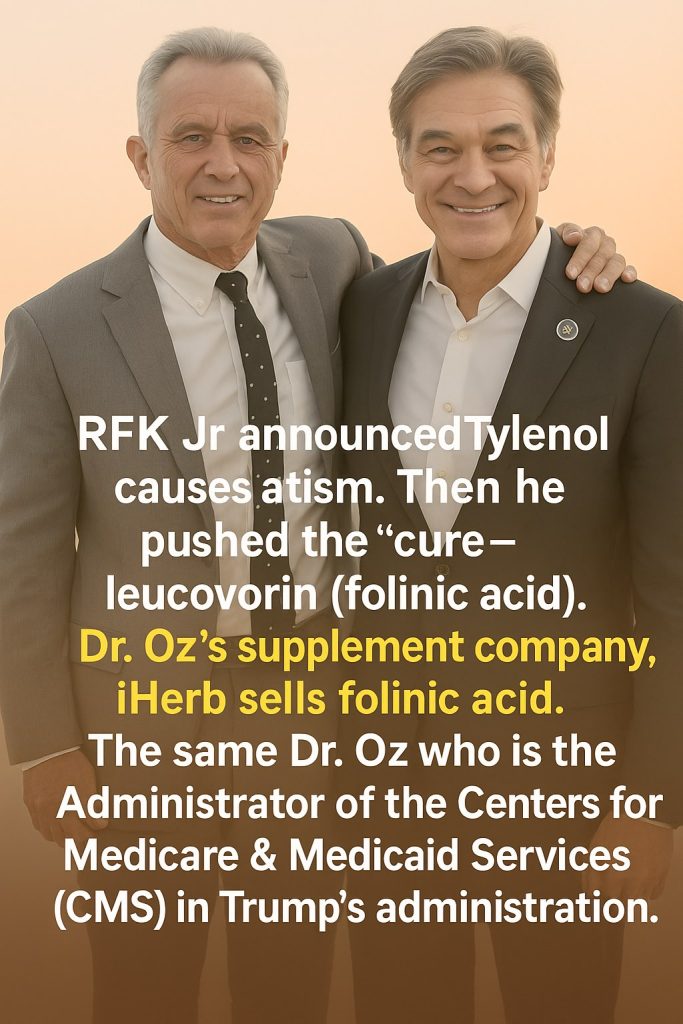
The internet is buzzing after Robert F. Kennedy Jr. (RFK Jr.), a prominent vaccine skeptic and environmental attorney, made startling assertions linking Tylenol to autism. In a social media post that quickly went viral, an image surfaced showing RFK Jr.’s grim warning: “Tylenol causes autism.” This bold claim has not only revived discussions about childhood vaccinations but also led many to question his motives and the underlying science behind his statements.
Alongside his controversial assertion, RFK Jr. touted a purported “cure” for the condition: leucovorin, a form of folinic acid. This connection has sparked outrage and concern among medical professionals and parents alike, as doubts mount regarding the credibility of both Kennedy’s claims and the suggested treatment.
The viral post gained further traction when users discovered that Dr. Mehmet Oz’s supplement company, iHerb, also sells folinic acid products. Critics argue that this interconnection raises ethical questions about the potential profit-driven motives behind RFK Jr.’s statements. The scenario presents a complex web of health misinformation and commercial interests.
The debate about the safety of Tylenol in children has been ongoing for years, particularly regarding its common use as a pain reliever and fever reducer. Yet, despite numerous studies, the overwhelming consensus within the scientific community is that no legitimate evidence supports the idea that Tylenol increases the risk of autism spectrum disorder (ASD).
Dr. Paul Offit, a pediatric infectious disease specialist and vaccine expert, called the claims “irresponsible.” He noted that while parents are naturally concerned about autism, spreading unfounded claims only serves to confuse the public and detract from more pressing public health messages. He emphasized the importance of sourcing information from credible medical sources rather than social media influencers.
As misinformation about vaccines and autism continues to proliferate, figures like RFK Jr. often reignite fears. The World Health Organization labels vaccine hesitancy as one of the top ten global health threats, creating urgency around countering misinformation. Counteracting baseless claims is integral not just for public health but also for building trust in medical guidance.
Social media platforms have taken steps to combat misinformation, yet the rapid spread of viral content often outpaces these measures. This situation has many questioning if further regulations are necessary to curb the tide of dubious health claims shared online. Parents and caregivers, especially, must remain vigilant, separating fact from fiction in an era characterized by a deluge of online information.
As discussions evolve, so does the call for responsible sharing. Health professionals urge everyone to seek out verified sources and engage in discussions rooted in science, not fear. With misinformation running rampant, now – more than ever – is the time for critical thinking and informed decision-making.