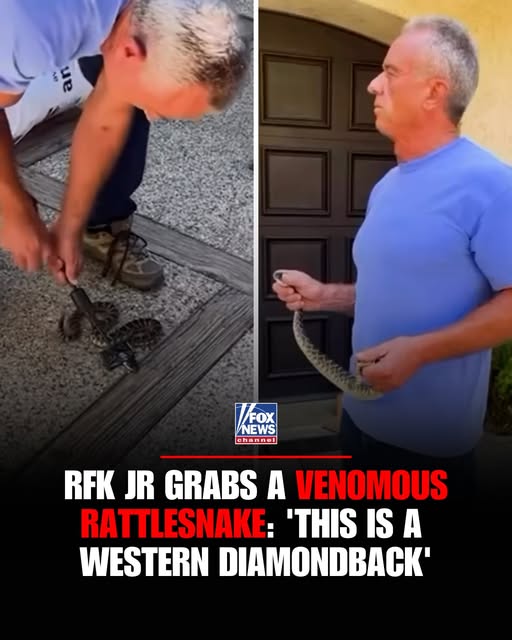
In a surprising turn of events that has both intrigued and alarmed social media users, Robert F. Kennedy Jr. shared a new video showing himself handling a highly dangerous Western diamondback rattlesnake. The clip comes just a day after Kennedy faced scrutiny for his earlier encounter with black racer snakes, which drew concern from viewers over safety and animal handling practices.
The latest footage, posted widely across social platforms, depicts Kennedy carefully gripping the venomous snake by its midsection, visibly cautious yet unwavering. “His fangs are in there. I don’t want to touch them,” Kennedy remarks, emphasizing the risk involved in his daring maneuver. The scene took place outdoors, apparently in a residential driveway, after the snake was discovered slithering close to his home.
Adding a touch of collaboration and calmness, Kennedy enlisted the help of his wife, actress Cheryl Hines. She appeared on camera bringing over a pillowcase, which Kennedy used to safely contain and transport the snake back into the wild. The act has sparked mixed reactions online: some admirers praised his bravery and commitment to interacting with wildlife, while critics voiced concerns over the possible dangers of handling venomous animals without professional training.
This incident shines a spotlight on Kennedy’s personal stance on environmental and wildlife issues, often advocating for increased preservation and respect for nature’s more perilous creatures. However, his recent actions also raise questions about safety and responsible animal handling, especially for a figure so prominent in the public eye.
Wildlife experts generally advise caution when dealing with venomous snakes such as the Western diamondback, which can deliver potentially lethal bites. While Kennedy’s approach appears cautious—and he clearly appreciates the risks—many urged viewers to leave such encounters to trained professionals instead of risking injury or worse.
Despite the controversy, Kennedy’s videos have garnered millions of views, igniting conversations about conservation, bravery, and the boundaries of personal interaction with wild animals. As the debate continues, many hope that such encounters will serve as educational moments rather than reckless publicity stunts.