
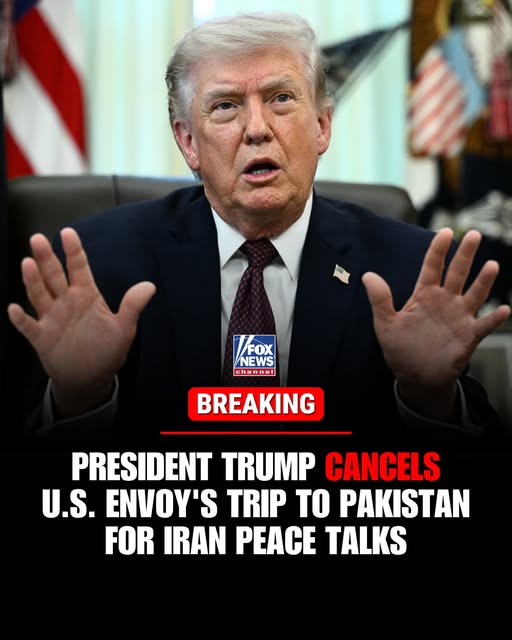
In a surprising move that has immediately sparked widespread speculation and media buzz, President Donald Trump has canceled a planned diplomatic trip involving U.S. negotiators to Pakistan, intended to facilitate talks with Iran. The trip, led by envoys Steve Witkoff and Jared Kushner, was slated to take place soon but was abruptly called off by the President himself.
According to sources close to the White House and confirmed by President Trump in a recent statement, the decision was driven by a strategic reassessment of the United States’ approach to the ongoing tensions with Iran. “I’ve told my people a little while ago they were getting ready to leave, and I said, ‘Nope, you’re not making an 18-hour flight to go there,’” Trump explained. “We have all the cards. They can call us anytime they want, but you’re not going to be making any more 18-hour flights to sit around talking about nothing.”
The trip was part of a broader effort to broker peace and stability in the volatile Middle East, with particular focus on easing U.S.-Iran tensions. The negotiations were reportedly set to include talks with Pakistani officials, considering Pakistan’s unique position as a regional power with influence over Iran and neighboring countries. However, the cancellation suggests a shift in Washington’s diplomatic strategy, possibly favoring maximum pressure over direct talks, at least for now.
Political analysts are weighing in on what this sudden reversal indicates. Some interpret the move as a sign that President Trump is prioritizing a tough-on- Iran policy, emphasizing negotiations on America’s terms rather than diplomatic excursions. Others see it as a tactic to leverage Iran’s desire for engagement, signaling that the U.S. remains in control of the timing and conditions of any future talks.
Notably, this decision comes amidst rising global tensions over Iran’s nuclear program, regional conflicts, and increasing pressure from U.S. allies calling for renewed diplomacy. It also coincides with a series of high-stakes discussions on broader foreign policy strategies and recent moves by Iran to advance its nuclear capabilities.
Despite the abrupt cancellation, officials indicate that the U.S. is still open to dialogue, just not under the current circumstances. “They can call us anytime,” Trump remarked, hinting that patience and a strong stance might be Washington’s preferred tactics for now.
The sudden change of plans underscores the unpredictable nature of international diplomacy in today’s geopolitics, and it leaves experts pondering what the next steps will be. Meanwhile, Pakistan, a key stakeholder in regional stability, has yet to comment publicly on the cancellation, but insiders suggest disappointment over the missed opportunity for dialogue that could have contributed to de-escalating tensions.