
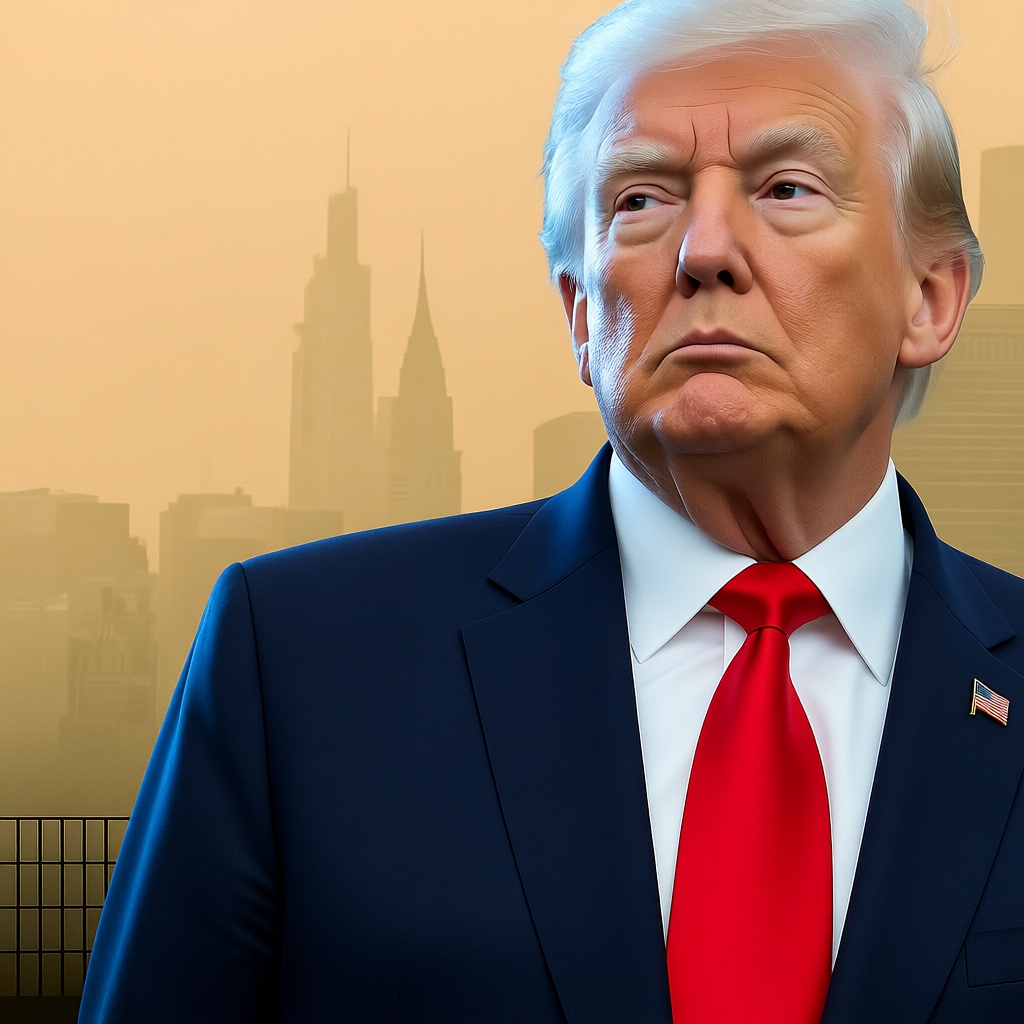
In a startling development amid worsening air quality across large parts of the United States, former President Donald Trump has publicly placed responsibility on Canada, accusing its government of negligence in forest management that he claims is fueling the deadly wildfire smoke threatening American communities.
According to a social media statement that quickly went viral, Trump asserted, “Canada has refused to engage in basic Forest Management and Debris Removal, knowing that such refusal will lead to exactly this result.” He further described Canada’s inaction as “Willful Negligence,” emphasizing that the recurring wildfire season and the resulting hazardous air pollution are becoming an increasingly costly national issue for the United States.
The statement comes as multiple U.S. states grapple with air quality levels exceeding hazardous thresholds, prompting health warnings, school closures, and emergency shutdowns. The dense smoke, predominantly originating from wildfires in Canada, has crossed borders, leading to unprecedented pollution levels in cities from New York to Chicago and beyond.
Experts in environmental management have long debated the importance of forest maintenance and debris removal in controlling wildfire seasons. Critics argue that neglecting these basic practices exacerbates wildfire severity, while officials on both sides of the border face pressure to implement more proactive measures.
Trump’s controversial comments have sparked debate online, with many questioning the efficacy and fairness of blaming Canada, while others agree that better forest management could reduce the frequency and severity of wildfires. Canadian officials have yet to directly respond to the accusations, but environmental groups emphasize that forest policies are complex and vary across provinces.
This statement also underscores a broader geopolitical angle—highlighting the tension and responsibility-sharing between neighbors in managing shared ecological risks. The annual wildfire season has become more intense, often attributed to climate change, but Trump’s comments suggest a focus on cross-border cooperation to prevent worsening air pollution crises.
Meanwhile, the economic toll of wildfires and smoke-related health issues continues to rise, with experts estimating billions in damages related to health care costs and disaster response efforts. As wildfire seasons extend and intensify, calls for improved forest management and international collaboration become more urgent.
Whether or not these sharp remarks will lead to diplomatic discussions or policy changes remains to be seen. For now, Americans remain under the haze of smoke, hoping for more effective mitigation strategies and accountability from neighboring nations.
Where to Learn More
- The Role of Forest Management in Wildfire Prevention – National Geographic
- Canada Responds to Wildfire Management Allegations – CBC News
- Health Effects of Wildfire Smoke and Air Pollution – NIH News & Events
- Canadian Forest Management and Climate Initiatives – Natural Resources Canada