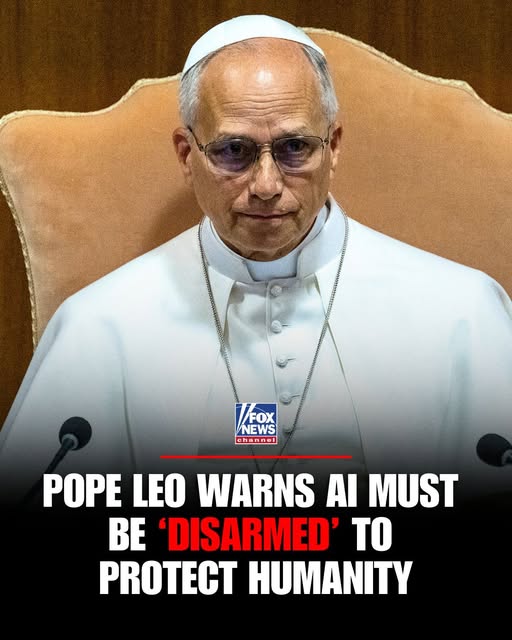
In a groundbreaking move that signals the gravity of the artificial intelligence (AI) debate, Pope Leo has issued his first major encyclical, raising urgent concerns about the unchecked proliferation of AI technologies. Framing the issue as a potential modern-day “Tower of Babel,” the pontiff warns that if AI development is not carefully regulated, it could lead to a future where human dignity is sacrificed for profit, power, and automation.
During the encyclical, Pope Leo articulated a stark warning: “Artificial intelligence, if left unrestrained, risks creating a new Babel—a technological hierarchy that values efficiency over human life, and automation over compassion.” The Pope emphasized the importance of setting strict ethical boundaries on AI, especially in dangerous domains such as warfare, where autonomous weapons could pose existential threats to global security.
“We must disarm the weaponization of AI,” he declared. “Technology should serve humanity, not dominate or destroy it. The development of AI must be guided by the dignity of the human person, not the ambitions of a select few.”
The pope also expressed concern over the concentration of AI power within a small group of tech elites, warning that such oligarchies could shape societal values without accountability, leading to societal divisions and the erosion of moral standards.
This call for ethical oversight comes amid rising fears of a future where machines, driven by AI, become autonomous decision-makers—potentially bypassing human judgment and moral considerations. Critics argue that unchecked automation, especially in lethal military applications, could lead to unpredictable and catastrophic consequences.
AI experts and ethicists have welcomed the Pope’s stance, urging governments and international organizations to collaborate in establishing global standards for AI development. Many see the pontiff’s intervention as a crucial moral compass, emphasizing that technological advancement must not come at the expense of human rights and dignity.
As nations race to harness AI’s potential, Pope Leo’s warning serves as a reminder that the path forward must include rigorous ethical reflection and global cooperation. Otherwise, the risk remains high that humanity could inadvertently create a future where machines govern in place of moral human judgment—an outcome no one should welcome.