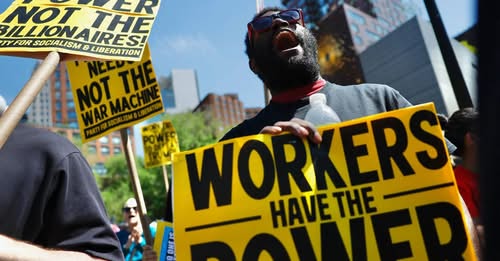
In what organizers describe as a powerful display of collective resistance, more than 4,000 demonstrations took place across the United States on May Day, highlighting a surge in grassroots activism demanding social justice, workers’ rights, and systemic change. These protests, collectively labeled as “May Day Rising,” united diverse groups united under a common banner of resistance and hope for a more equitable future.
During the events, activists and community members occupied streets, parks, and public spaces from coast to coast, calling attention to issues such as income inequality, immigration reform, climate change, and police brutality. The demonstrations marked a significant escalation in domestic activism, with organizers emphasizing that May Day is not only a celebration of workers but also a platform to challenge the status quo.
“During the ‘No Kings’ demonstrations, we showed what we’re against,” said Juan Hernandez, a leading organizer involved in many of the protests. “May Day is the day we’re making clear what we are fighting for,” he continued, pointing to the broader goal of shifting narratives around work, power, and justice.
The protests were largely peaceful but energized, with marchers carrying signs, banners, and chanting slogans that echoed demands for fair wages, support for immigrant communities, and action against climate devastation. In several cities, demonstrations included symbolic acts like sit-ins, graffiti art, and street theater, aiming to draw media attention and inspire community engagement.
This year’s surge in activism can be seen as part of a larger wave of social movements that have gained momentum in recent years, fueled by a rising sense of urgency among marginalized groups and younger generations. Social media played a pivotal role in mobilizing participants, coordinating events, and sharing stories of struggle and solidarity in real time.
Political analysts note that these demonstrations are a sign of increased discontent with governmental policies and corporate influence, especially in the wake of recent economic downturns and social unrest. Many protesters targeted symbols of authority and power, including financial institutions, government buildings, and corporate headquarters.
For organizers, May Day is more than just a day of protest — it’s a call to action year-round. “This isn’t just about one day; it’s about creating sustained pressure for meaningful change,” said Hernandez. As communities continue to rally and advocate, the momentum generated on May Day is expected to continue shaping activism across the nation.
Where to Learn More
- Over 4,000 May Day Demonstrations Erupt Across U.S., Marking a New Wave of Activism – The New York Times
- May Day Protests Sweep the U.S., Highlighting Growing Social Movements – The Washington Post
- US May Day Demonstrations Focus on Workers’ Rights and Justice – Al Jazeera
- US May Day Protests Signal Rising Discontent and Demand for Change – Reuters