
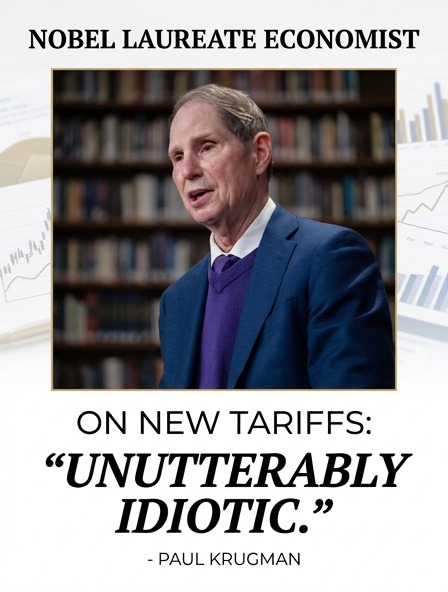
In a rare public rebuke from a leading economist and Nobel laureate, Paul Krugman has criticized President Donald Trump’s recent move to implement new tariffs, describing them as “unutterably idiotic.” The outspoken economist’s blunt assessment underscores growing concerns among experts about the economic wisdom of the tariffs amid a complex global trade landscape.
President Trump announced a new round of tariffs earlier this week aimed at increasing import taxes on various goods, including steel and aluminum. The move, part of the administration’s ongoing efforts to boost American manufacturing and negotiate better trade deals, has faced widespread criticism from economists, industry leaders, and politicians alike.
Krugman, a distinguished economist known for his rigorous analysis and frequent commentary on economic policy, did not hold back in his critique. In a series of tweets, he dismissed the tariffs as “dangerous and counterproductive.” He elaborated, saying, “These tariffs are not just economically foolish, they’re downright idiotic. They distort markets, invite retaliation, and do nothing to address the real challenges facing American industry.”
His comments reflect a broader consensus among economists that tariffs often backfire—raising costs for consumers and businesses while risking trade wars that can harm the global economy. Many financial analysts warn that such measures could lead to increased inflation, supply chain disruptions, and a decline in productivity growth.
Moreover, Krugman pointed out that the cost of these tariffs would likely be borne by American consumers and workers, rather than foreign producers. “The idea that tariffs somehow help ordinary Americans is a myth,” he stated. “In reality, they hurt consumer choice, raise prices, and undermine the competitive advantages of U.S. industries.”
Despite the administration’s assertions that the tariffs are necessary to protect American jobs and leverage better trade terms, economic experts warn that the tactics may be short-sighted. Historically, such tariffs have often prompted retaliation from trading partners, leading to a cycle of harm that ultimately damages the U.S. economy.
This sharp critique from Krugman follows a pattern of increased skepticism from the economic community towards the current administration’s trade policies. Critics argue that these tariffs translate into a unilateral approach that threatens the stability of both domestic and international markets.
As debate intensifies, the political implications are also noteworthy. While the Trump administration maintains that tariffs are a vital tool in strengthening the American economy, experts like Krugman emphasize the importance of strategic, evidence-based policies that prioritize long-term growth over short-term gains.
In summary, Nobel laureate Paul Krugman’s characterization of the tariffs as “unutterably idiotic” accentuates the widespread concern about the potential fallout from these economic measures. It demonstrates the ongoing debate about the best approach to protect American industries without undermining global economic stability.
Where to Learn More
- Krugman Slams Trump’s New Tariffs as ‘Unutterably Idiotic’ – The New York Times
- The Economics of Trumpian Tariffs: A Critical Perspective – The Economist
- Trade Experts Warn Trump’s Tariffs Could Cause Economic Harm – Bloomberg
- Political Reactions to Krugman’s Critique of Tariffs – CNN