
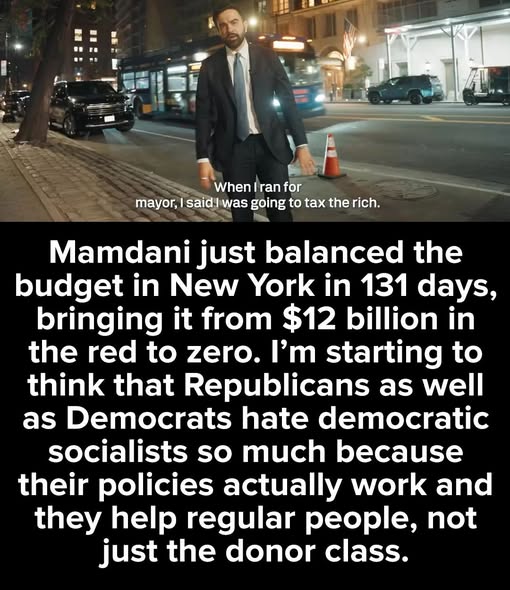
In a bold move that has captured the attention of residents and political analysts alike, New York City Mayor Mamdani announced the successful balancing of the city’s budget in just 131 days—shattering previous records and reigniting debates over fiscal responsibility and economic inequality.
When Mamdani took office, one of his most prominent campaign promises was to address the city’s staggering $12 billion deficit through progressive taxation and innovative budget management strategies. The social media buzz was swift and enthusiastic, with one viral post stating: “When Ran when Iran for mayor, said I was going to tax the rich. Mamdani just balanced the budget in 131 days, bringing it from $12 billion in the red.”
This swift turnaround comes as a surprise to many, especially considering New York’s historically complex budget processes. According to city officials, Mamdani’s administration prioritized targeted tax reforms on ultra-wealthy individuals and corporations, alongside cuts in wasteful spending and increased efficiency in public services.
Mayor Mamdani emphasized during a recent press conference that his approach was rooted in fairness and long-term fiscal sustainability. “We are not just balancing the books; we are creating a foundation for a stronger, more equitable New York,” he said. “Taxing the rich fairly is part of building a city where all residents can thrive.”
Public reaction has been mixed but largely positive among residents who have long called for greater accountability and economic justice. Critics, however, argue whether this approach is sustainable and whether it could lead to unintended economic consequences, such as capital flight or reduced investments.
Economists are observing this unprecedented feat with curiosity. Some argue that innovative tax enforcement and aggressive revenue collection strategies, combined with a healthy economy, have made this rapid turnaround possible. Others maintain that maintaining such a surplus will require continued political will and careful planning.
This achievement marks a significant milestone not only for Mamdani’s administration but also for the broader conversation on how cities with deep income disparities can leverage fiscal policies to promote fairness and stability. As New Yorkers celebrate this historic feat, others are looking to whether this fiscal strategy can serve as a blueprint for other financial challenges facing major cities across the globe.