
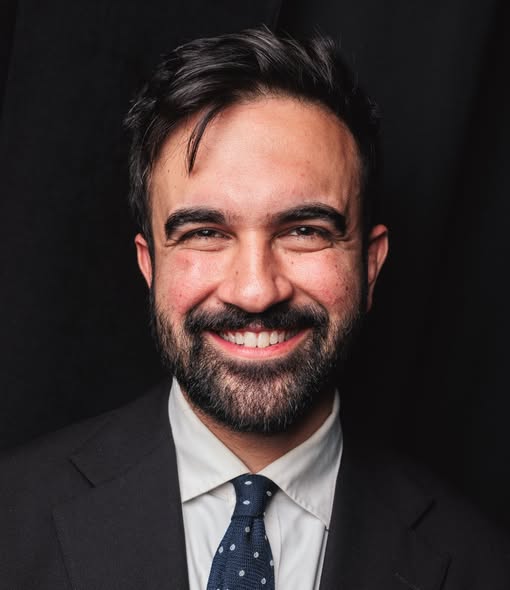
In a bold move that has captured headlines across the nation, Zohran Mamdani, the newly elected Mayor of New York City, is turning campaign promises into action by implementing a groundbreaking tax targeting the city’s wealthiest property owners. His administration announced the first-ever pied-à-terre tax in New York history—a strategic measure aimed at penalizing luxury property owners who do not reside full-time in the city.
During his campaign, Mamdani was clear about his priorities: “When I ran for mayor, I said I was going to tax the rich. Well, today, we’re taxing the rich.” His statement is now a reality, with the city set to impose an annual fee on luxury properties valued over $5 million, owned by non-residents. This initiative is designed to address economic inequality, stimulate city revenues, and fund essential public services.
The tax’s launch comes amid mounting concern over the concentration of wealth in New York City, particularly involving the use of high-end properties as investments rather than residences. For example, hedge fund executive Ken Griffin purchased a penthouse for a staggering $238 million—a symbol of the opulence that Mamdani’s policy aims to curb. Under the new rules, owners like Griffin will face an annual fee, effectively taxing wealth that once sat comfortably in luxury real estate with little contribution to city life.
Here’s how the pied-à-terre tax works: Any property valued above $5 million that is owned by an individual but not used as a primary residence will be subject to the tax. Many of these units sit vacant most of the year, inaccessible to the hardworking residents who rely on public services funded by city taxes. This mismatch—wealth stored in empty condos and penthouses—has long been criticized as unfair and detrimental to the city’s economic health.
Mamdani emphasizes that the revenue generated from this tax—estimated at over $500 million annually—will help fund crucial programs such as free childcare, cleaner streets, and safer neighborhoods. This initiative reflects a broader philosophy that everyone should contribute fairly, especially the ultra-wealthy who benefit immensely from the city’s infrastructure and culture.
“This is a fundamentally unfair system that hurts working New Yorkers,” Mamdani stated, adding, “Now, it’s coming to an end.” His administration’s stance signals a shift towards more equitable wealth distribution, emphasizing that those who have profited significantly from the city’s prosperity should play a larger role in its upkeep.
The policy has garnered both praise and controversy, sparking debates about fairness, property rights, and economic impact. Nevertheless, Mamdani’s tenure is seen by supporters as a necessary step toward reducing inequality and ensuring that the city’s wealthiest contribute their fair share to the community they benefit from—without necessarily residing there.
As New Yorkers celebrate “Tax Day,” Mamdani’s bold approach underscores a broader movement toward progressive taxation and social justice in urban centers across the globe. It remains to be seen how the policy will be implemented and enforced, but the message is clear: promises made on the campaign trail are now being realized in concrete, impactful ways.
Where to Learn More
- NYC’s First-Ever Pied-à-Terre Tax Brings Wealthier Residents Into the Fold – The New York Times
- NYC Implements Historic Tax Targeting Non-Resident Luxury Property Owners – NBC New York
- Crain’s New York: City Approves New Pied-à-Terre Tax to Fund Public Services
- City & State NY: A Fairer Tax System for NYC’s Wealthiest