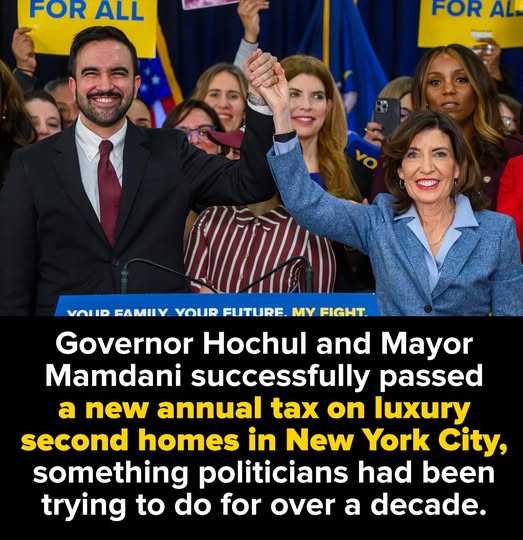
In a significant move aimed at addressing rising housing disparities and generating revenue for the city, Governor Kathy Hochul and Mayor Mamdani have successfully passed a groundbreaking annual tax targeting luxury second homes in New York City. The legislation marks one of the most notable policy shifts in recent years, targeting the city’s most affluent property owners to fund affordable housing initiatives and urban development projects.
The new tax, announced during a press conference earlier this week, specifically targets high-value properties classified as secondary residences — often owned by wealthy individuals seeking a second home in the city. This measure is designed to curb property speculation, improve housing affordability, and generate billions in revenue that will be redirected to public programs.
Details of the Legislation
The tax imposes an annual surcharge on second homes valued above a certain threshold—initial estimates suggest properties exceeding $5 million will be impacted. The tax rate will vary based on property value, with the highest brackets seeing the steepest increases. Critics argue that the new legislation may impact the luxury real estate market, but proponents counter that it is a necessary step toward equitable urban development.
This policy aligns with larger national conversations about housing inequality and tax fairness. According to city officials, revenue generated from this tax is projected to fund affordable housing schemes, infrastructure renewal, and social services. “This is a bold step toward making New York City more accessible and equitable for all residents,” said Mayor Mamdani at the announcement.
Governor Hochul added, “Luxury second homes should contribute their fair share to the community. This tax ensures that those who benefit from the city’s prosperity also invest in its future.”
While support for the measure has been widespread among housing advocates and progressive policymakers, some real estate industry representatives warn that the tax could potentially discourage investment and impact the luxury market’s vibrancy. However, officials emphasize that the legislation includes provisions to mitigate unintended economic consequences.
The legislation also includes provisions for enforcement and transparency, aiming to ensure compliance and prevent evasion. It’s expected to take effect starting next fiscal year, with initial revenue projections indicating a significant increase in city coffers.
As New York City continues to grapple with a housing crisis, this move signals a notable shift toward progressive taxation and the recognition that affordable housing is a core component of urban prosperity.
Where to Learn More
- NYC Passes New Luxury Second Home Tax to Boost Affordable Housing – The New York Times
- NYC Governor and Mayor Approve Tax on Second Homes in Bid to Tackle Housing Crisis – CNBC
- City & State NY: NYC’s New Luxury Home Tax and Its Impact on Housing Policy
- Urbanistas: How the New Second Home Tax Could Shape NYC’s Real Estate Market