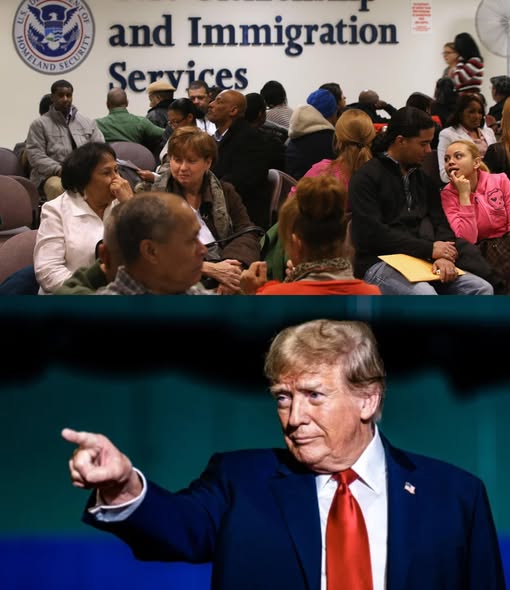
In a groundbreaking and controversial move, the U.S. Citizenship and Immigration Services (USCIS) announced a sweeping policy change that has left hundreds of thousands of legal immigrants caught in a state of uncertainty. Starting immediately, individuals on temporary visas—such as students, temporary workers, and tourists—who wish to adjust their status to obtain a green card will be required to return to their home countries to complete their applications through U.S. consulates abroad.
This new rule marks a profound departure from decades of established immigration procedures, where many applicants could process their green card requests from within the United States. Announced quietly on Friday, the change effectively creates a significant barrier for roughly 500,000 people annually who are doing everything “by the book.” Instead of the familiar process of adjusting status from within the country, these applicants now face an intimidating and disruptive journey abroad—demolishing stability for many families and risking their ability to return.
The implications are vast. Typically, about 1 million people apply for green cards each year, with roughly half doing so from within the U.S. This means that half a million individuals—who have been lawfully living and working in America—must now abandon their jobs, uproot their families, and navigate bureaucratic hoops abroad solely to submit paperwork that was previously manageable from home. And for those from countries with travel bans—over 100 nations in some cases—this process could be virtually impossible, effectively rendering their hopes for legal residency moot.
Former USCIS official Doug Rand articulated the gravity of the policy shift, warning that many of these individuals are being “forced into exile” under the guise of streamlining enforcement. “They’re telling lawful residents to go home—to a country they may not even recognize anymore—just to apply for the very status they have already qualified for,” Rand explained. He pointed out that forcing applicants to leave could easily result in them being barred from reentry, especially if the country they are returning to has a travel ban in place.
Further complicating the picture, critics highlight that the administration’s framing of this policy—of fighting “shadow” immigrants—essentially criminalizes individuals who have followed the law. The new policy, they argue, targets legal pathways, turning the immigration system into a punitive trap that discourages lawful participation and, ultimately, aims to phase out legal immigration entirely.
The reaction from advocacy groups has been swift and strong. World Relief, a well-known Christian humanitarian organization, called the policy “cruel” and “anti-family,” warning it will tear apart families by forcing parents to leave children behind and spouses to be separated. Many see this as a stark betrayal of the promise to “do it right” and wait patiently in line—principles repeatedly emphasized by policymakers. Instead, this change appears designed to disincentivize lawful immigration entirely.
As legal experts and immigrant advocates scramble to understand the full scope of this new policy, it’s clear that behind the official language lies a profound shift that could redefine the future of legal immigration in America. Critics warn that this move not only undercuts decades of legal precedent but also sends a chilling message to potential immigrants: follow the rules at your peril, as the system may turn against you when you try to settle legally.