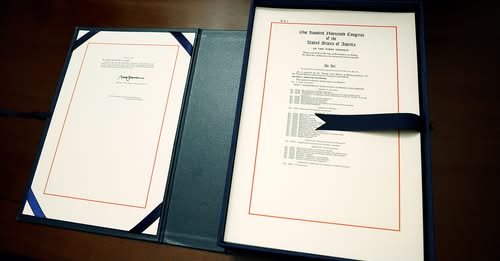
It has been nearly a year since President Donald Trump signed into law the controversial One Big Beautiful Bill Act, a piece of legislation promoted by congressional Republicans that promised to streamline government, bolster the economy, and cut taxes. However, as the months have passed, a troubling pattern has emerged: millions of Americans are losing critical healthcare coverage and food assistance, even as the nation’s wealthiest households continue to reap significant tax benefits.
The legislation, touted as a major reform, included provisions aimed at modernizing various government programs. Yet, recent data and testimonies reveal that the implementation has brutally impacted vulnerable populations, with some reports indicating that over 10 million Americans have lost Medicaid coverage since the law’s enactment. Food security programs like SNAP (Supplemental Nutrition Assistance Program) have also faced significant cuts, leaving many families struggling to put food on the table.
Meanwhile, the highest income households are benefiting from expanded tax breaks, with estimates suggesting that the top 1% of earners are seeing their tax liabilities decrease by thousands of dollars annually. This disparity has sparked fierce debate over the fairness of the legislation, especially amid ongoing economic struggles for lower- and middle-income families.
Critics argue that the law’s implementation reflects a troubling prioritization—favoring the wealthy at the expense of everyday Americans. “While the tax breaks for the rich continue to grow, millions are losing their healthcare and food benefits,” says Dr. Maria Lopez, a policy analyst at the Center for Economic Justice. “This isn’t just about policy differences; it’s about the real hardship being inflicted on families already vulnerable.”
Supporters of the law contend that it has spurred economic growth and reduced government waste, though these claims are heavily contested by opposition groups and independent analyses. The reality remains clear: the social safety net is fraying for many Americans, with the most basic needs unmet for millions.
Advocates are now calling for urgent reforms and increased accountability, emphasizing that legislation should protect vulnerable populations rather than exacerbate inequality. Several grassroots organizations are mobilizing efforts to press lawmakers for policy changes that restore health and food benefits to those most in need.
As the one-year anniversary of the law’s signing approaches, the question remains: can policymakers reverse these harmful trends? For now, millions of Americans continue to face the harsh consequences of a law that, for many, has worsened their daily struggles rather than alleviating them.
Where to Learn More
- Analysis of the One Big Beautiful Bill Act’s Impact on Americans — Associated Press
- How Legislation Is Cutting Healthcare and Food Aid for Millions — The New York Times
- Center on Budget and Policy Priorities: Food Assistance and Policy Reports
- Congressional Budget Office Report on Tax Breaks and Income Distribution