
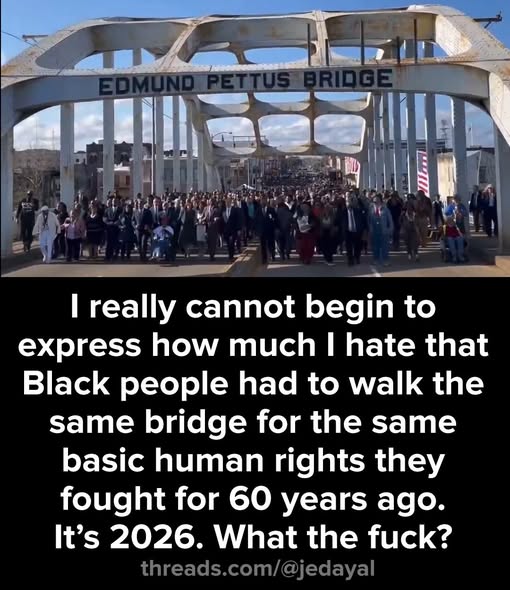
In a time when progress in civil rights has been heralded as monumental, a poignant social media post has reignited a painful conversation about racial inequality in the United States. A powerful message, accompanied by an image or text asserting disbelief and frustration, states: “I really cannot begin to express how much I hate that Black people had to walk the same bridge for the same basic human rights they fought for 60 years ago.”
This statement underscores a concerning reality—that despite decades of activism, legislation, and societal shifts, African Americans continue to face systemic barriers that force them into similar struggles they endured generations ago. The “bridge” here is symbolic, referencing historic marches such as the Selma to Montgomery march of 1965, where activists faced violence and discrimination to secure voting rights. Today, many see the images of contemporary protests and marches as echoes of that era—signs that the fight for true equality remains unfinished.
The viral post sheds light on a painful truth: while significant strides have been made since the Civil Rights Movement, racial disparities persist across multiple domains, including voting rights, criminal justice, education, housing, and employment. Recent incidents of police brutality and the resurgence of racial profiling have reignited fears that fundamental rights are still out of reach for many Black Americans. These ongoing struggles have prompted a wave of activism, demonstrations, and social media outcries spotlighting the pervasive nature of racial inequality.
Many experts and community leaders argue that the persistence of these issues indicates a deeper systemic problem that cannot be solved overnight. Equality isn’t just about the legislation passed decades ago but about equitable access and treatment in everyday life. Historically rooted institutional biases and disparities continue to reproduce themselves, effectively forcing some to walk the “bridge” repeatedly.
The emotional weight behind the social media post also speaks to the fatigue that many Black Americans feel. It’s a reminder that fighting for basic human rights is an ongoing process, often lacking recognition or acknowledgment from broader society. It underscores the importance of ongoing activism, education, and policy reform to bridge the gap between legal rights and lived realities.
This viral moment acts as a wake-up call and a plea for society to reflect on how far we’ve come—and how much further we have yet to go. It reminds us that justice, equality, and human dignity are principles that require constant vigilance and effort.