
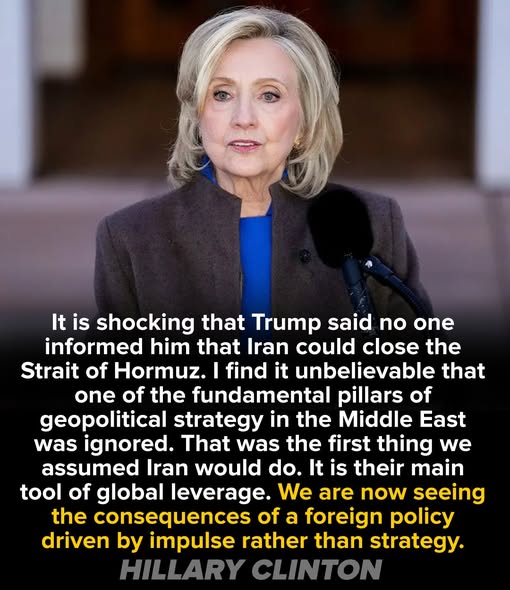
In a recent social media uproar, a startling claim has surfaced claiming that former President Donald Trump was unaware of a critical geopolitical threat—the potential closure of the Strait of Hormuz by Iran. An image circulating widely on platforms like Twitter and Facebook suggests that Trump purportedly stated, “No one informed me that Iran could close the Strait of Hormuz,” a statement that many are finding difficult to believe given the importance of this waterway in global oil transportation.
The Strait of Hormuz, a narrow passage between the Persian Gulf and the Gulf of Oman, is one of the world’s most strategic choke points. Over 20% of the world’s petroleum—roughly 21 million barrels daily—passes through this vital corridor. Its closure would have catastrophic consequences for global markets, potentially triggering a surge in oil prices and economic instability worldwide.
The claim that a sitting or former U.S. leader might have been unaware of such a fundamental pillar of international geopolitics immediately sparked reactions from political analysts, security experts, and citizens alike. Critics argue that such ignorance, if true, indicates a significant failure in leadership and intelligence sharing on critical national security issues. Conversely, some skeptics question the authenticity or context of the statement, suggesting it could be taken out of context or exaggerated for viral impact.
This controversy underscores ongoing debates about the level of awareness and preparedness of U.S. administrations regarding Iran’s strategic moves. Iran has long threatened to close the Strait of Hormuz in response to sanctions and external pressures, and military officials regularly highlight the importance of deterrence strategies to prevent such a scenario. The notion that a prominent figure might not be aware of such a fundamental threat raises questions about how intelligence information is communicated at the highest levels of government.
While the social media text evokes strong emotions and reactions, it also serves as a reminder of the importance of verified information. In the era of viral content, misinformation can spread quickly, often blurring the lines between fact and rumor. Experts advise relying on official statements and corroborated sources for such significant claims.
Whether the claim about Trump’s knowledge—or lack thereof—is accurate or not, it emphasizes the broader issue of transparency in leadership and the critical role of intelligence agencies in safeguarding national security. As global tensions escalate, understanding the strategic importance of waterways like the Strait of Hormuz becomes all the more vital for citizens and policymakers alike.