
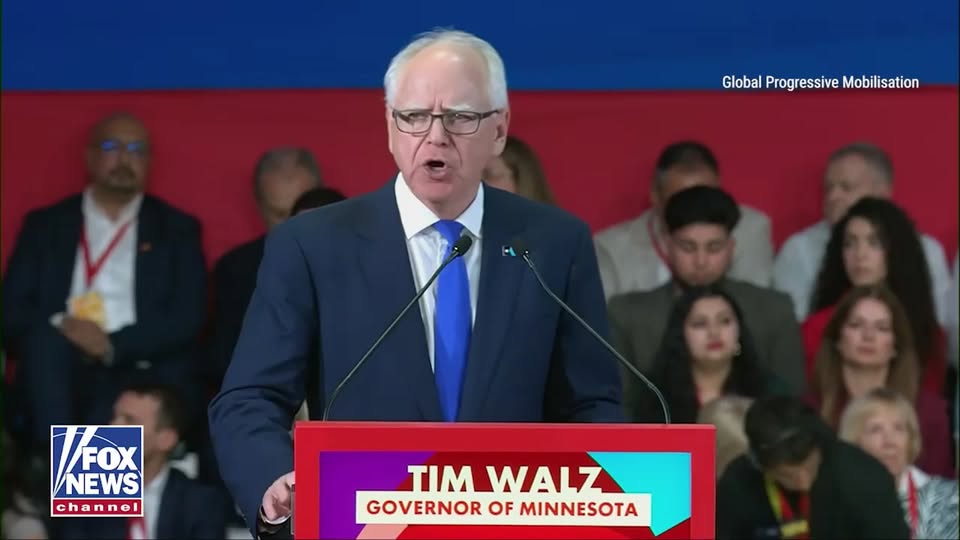
In a rare and fiery public critique, Minnesota Governor Tim Walz has openly voiced strong opposition to the current presidential administration’s approach to foreign policy, calling out what he describes as dangerous and unfounded military actions. During recent remarks, Walz explicitly condemned the President’s decision to involve the nation in a seemingly unnecessary war, asserting that it was driven by reckless leadership rather than strategic necessity.
Walz didn’t shy away from using forceful language, asserting, “We’ve got a feeble-minded, trigger-happy president who plunged us into a war where no threat was present, with no clear objectives and no exit plan.” His remarks struck a chord on social media, sparking widespread debate about the administration’s foreign policy decisions, and rekindling fears about the erosion of democratic checks and balances.
The Minnesota governor went further, framing the administration’s actions within a broader critique of authoritarian tendencies, stating, “We need to call that what it is. That’s fascism.” The comment has ignited a firestorm among political commentators, activists, and citizens alike, highlighting the deepening divide over U.S. foreign policy and leadership style.
This commentary follows months of growing concern among various political factions about the administration’s approach to international conflicts, especially regarding recent military interventions. Critics argue that absent clear threats or strategic objectives, such actions threaten not only diplomatic relations but also the fundamental principles of democracy and accountability.
Some analysts interpret Walz’s remarks as indicative of a broader resistance within the Democratic spectrum, emphasizing the importance of measured, transparent decision-making when it comes to war. His vocal stance also reflects a rising trend among policymakers advocating for a reevaluation of military engagements and a reassessment of how American leadership commits troops and resources abroad.
While the White House has yet to respond publicly to Walz’s comments, the statement underscores the ongoing internal dissent and the high-stakes debate over America’s role on the global stage. As divisions deepen, citizens are urged to stay informed and critically evaluate the evolving narrative surrounding national security and leadership.