
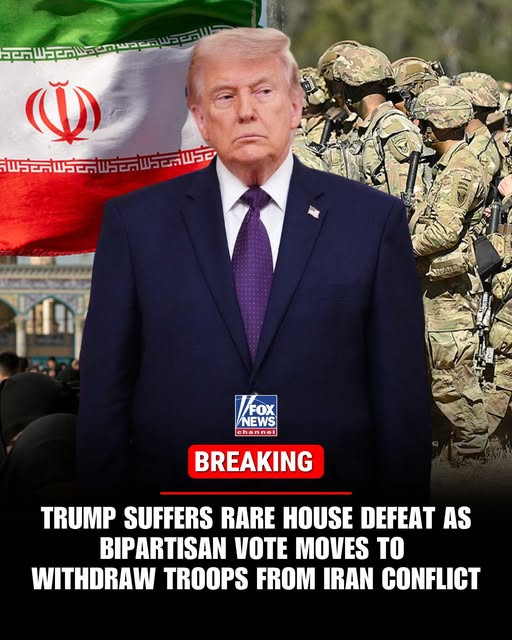
In a rare and significant move, the U.S. House of Representatives delivered a bipartisan rebuke to President Donald Trump by passing a resolution aimed at sharply curbing his authority to engage in military action against Iran. The vote, which took place on Thursday, resulted in a 215-208 tally—marking a notable departure from the usual partisan divide on foreign policy issues.
The measure, primarily symbolic but politically potent, stipulates that U.S. military force against Iran cannot be authorized without explicit congressional approval. It follows escalating tensions between the U.S. and Iran, including recent strikes and escalation fears that many lawmakers believe warrant closer congressional oversight.
All Democratic members present backed the initiative, emphasizing Congress’s role in decisions that could lead to broader conflicts abroad. Notably, four Republican Representatives—Thomas Massie, Warren Davidson, Brian Fitzpatrick, and Tom Barrett—joined Democrats in supporting the resolution, breaking ranks with President Trump.
While the vote signals a significant ideological split and reflects growing congressional concern over unchecked presidential military powers, it is largely symbolic at present. President Trump has indicated that he intends to veto the measure, and supporters acknowledge they lack the votes to override such a veto, should it occur.
Analysts suggest that this bipartisan move underscores the evolving landscape of U.S. foreign policy, where increasing skepticism about military interventions is shaping legislative actions. The opposition’s courage to challenge the executive branch’s authority, even narrowly, could foreshadow a more active role for Congress in future foreign conflicts.
President Trump’s stance has historically favored a swift, unilateral approach to foreign threats, citing the need for decisive action. However, the recent House vote demonstrates that, at least in some corners of Congress, there is a push for greater civilian oversight and caution in military engagements.
The vote does not immediately alter U.S. military commitments but sends a clear message about the ongoing debates surrounding the use of force, especially in volatile regions like the Middle East. As the situation with Iran continues to evolve, experts warn that future conflicts could ignite debates over constitutional powers and the scope of presidential authority.
In the coming weeks, the political theater surrounding Iran and U.S. foreign policy will likely intensify, with lawmakers and the administration watching closely how this symbolic but meaningful vote influences future actions.
Where to Learn More
- House Passes Measure Limiting Trump’s Iran War Powers — The New York Times
- Bipartisan House Vote Challenges Trump’s Authority over Military Action Against Iran — The Washington Post
- House Votes to Restrict President’s War Powers on Iran — CNN
- U.S. House Challenges Trump’s Iran Military Authority — BBC News