
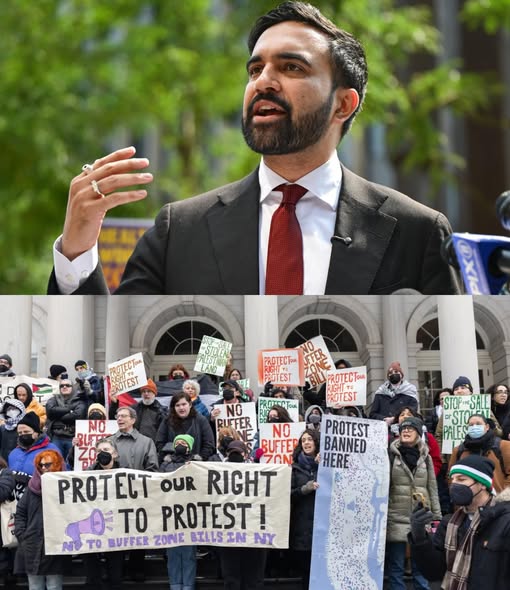
In a decisive display of leadership, New York City Mayor Zohran Mamdani has vetoed a controversial bill that critics say would have significantly restricted the right to protest on public and institutional grounds. The legislation, narrowly passing through City Council with a vote of 30 to 19, sought to grant police the authority to wall off protesters from “educational institutions,” a term so broad that it could include universities, museums, and even hospitals.
The proposed bill’s implications alarmed community organizers and labor unions alike. Nearly a dozen unions, including the Committee of Interns and Residents, Teamsters Local 804, and UAW Region 9A — representing educators and healthcare workers at institutions like Columbia and NYU — voiced strong opposition. The New York Civil Liberties Union (NYCLU) also took a firm stand against the measure, warning that it threatened fundamental rights to assembly and free expression.
In blocking the legislation, Mamdani sent a clear message: protest is not a public safety threat but an essential pillar of democracy. “A mayor who protects that engine is a mayor doing the job,” Mamdani declared, signaling his commitment to safeguarding constitutional rights and the voice of working people.
The bill’s passage had ignited widespread concern across the city, especially among groups that mobilize in public spaces—from nurses’ striking teams and student activists to organizers protesting immigration policies. Under its proposed scope, police could have used the power to quarantine demonstrations behind barriers, effectively silencing voices during moments of crucial civic action.
While the bill faced opposition from advocates for free speech, it managed to clear the Council just shy of what’s required for a veto override. However, Mamdani’s decision to exercise his veto position highlights a fundamental difference in leadership approach. Instead of governing by polling or political expediency, he made a principled stand prioritizing citizens’ rights to assemble and protest.
This move draws praise from advocates who see it as a vital protector of civil liberties amidst increased concerns over police overreach. As protests continue to fuel social change across the country, decisively defending the right to gather publicly is more critical than ever.
In a city known for its activism and diversity of thought, Mayor Mamdani’s veto exemplifies a leadership style rooted in principle rather than mere political calculus. It reaffirms that the power of protest is integral to progress—and that safeguarding that power remains a responsibility of elected officials committed to justice and democracy.