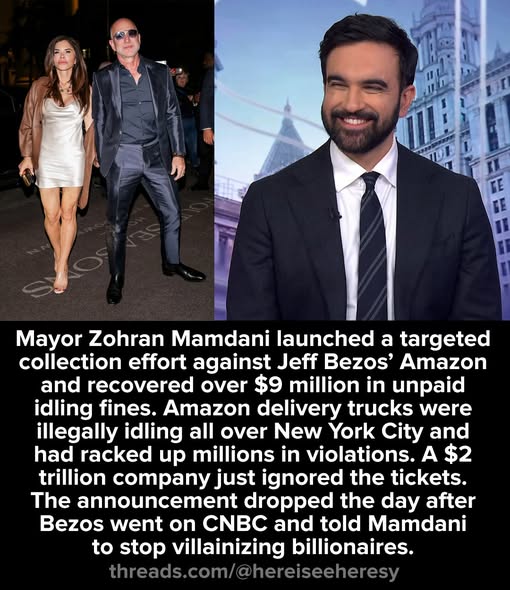
In a bold move against environmental violations and corporate neglect, Mayor Zohran Mamdani has launched a targeted enforcement campaign against Amazon and its delivery contractor fleet, resulting in the recovery of over $9 million in unpaid idling fines. This initiative marks a significant step in local efforts to hold major corporations accountable for their impact on community health and the environment.
The campaign was sparked by reports of Amazon delivery trucks idling excessively in residential neighborhoods, contributing to air pollution and greenhouse gas emissions. Despite existing regulations aimed at reducing vehicle emissions, many companies have historically sidestepped enforcement, putting profits above community well-being. Recognizing this issue, Mayor Mamdani coordinated with city regulators and legal teams to conduct a comprehensive audit of Amazon’s local operations.
The results? An impressive recovery of over $9 million in fines, representing a significant crackdown on companies failing to comply with traffic and environmental standards. The enforcement action targeted hundreds of Amazon delivery vehicles across the city, with investigators documenting repeated violations of idling regulations during peak hours. The fines include penalties for trucks left running for extended periods, often as a cost-cutting measure or due to logistical lapses.
Mayor Mamdani’s office stated that this effort aligns with the city’s broader environmental justice initiatives, aiming to reduce air pollution and improve quality of life for residents. “Big corporations like Amazon have a responsibility to operate within the bounds of our laws and respect our communities,” Mamdani said in a statement. “Our enforcement efforts send a clear message: compliance is not optional, and we will hold violators accountable.”
The move has garnered widespread support from environmental groups and community activists, who have long criticized the outsized carbon footprint of large logistics companies. Critics argue that without robust enforcement, these corporations continue to prioritize delivery speed over environmental and public health concerns.
This case also sets a precedent for other municipalities grappling with similar issues. As urban delivery services expand rapidly, city officials nationwide are called to step up enforcement to combat pollution and ensure fair regulation of corporate fleets. Experts suggest that such targeted campaigns could become a model for sustainable city management, balancing economic activity with environmental preservation.
Amazon has yet to release an official response. However, the company’s local representatives have indicated that they are reviewing the enforcement actions and claim that they are committed to complying with local laws moving forward. Industry observers anticipate increased scrutiny of corporate logistics operations as cities double down on environmental enforcement efforts.
As climate and health concerns intensify, Mayor Mamdani’s bold approach highlights the critical role local governments can play in regulating giants like Amazon, ensuring they contribute fairly to the communities they serve and the planet we all share.