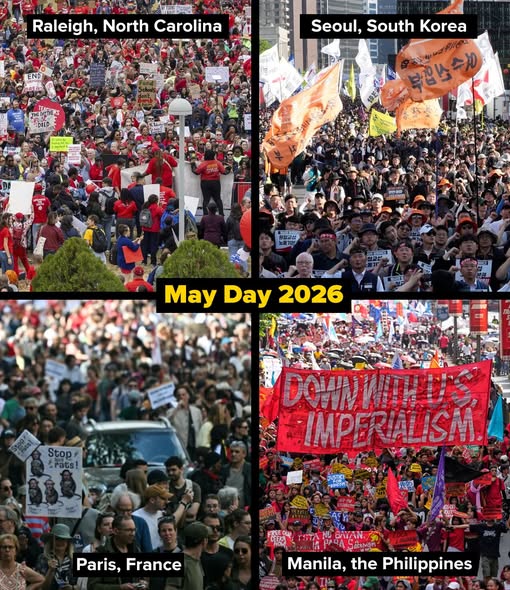
Every year, May Day serves as a powerful reminder of the origins of labor solidarity—began in 1866 when over 300,000 American workers took to the streets demanding better conditions. Today, that historic protest has blossomed into a worldwide movement, uniting workers, students, and families in a collective stand against economic injustice and political oppression. This year, May Day 2026 has delivered an unprecedented show of solidarity, demonstrating that the fight for fair treatment remains as urgent and widespread as ever.
In the United States alone, more than 500 events converged under the rallying cry “Workers Over Billionaires.” Major demonstrations took place in Chicago, New York City, Los Angeles, Washington D.C., and Seattle, echoing a message that resonates far beyond national borders. Globally, protests spanned from Seoul and Sydney to Paris and Manila, reflecting a shared frustration with policies that favor the wealthy while working-class communities bear the brunt of economic fallout.
The European Trade Union Confederation (ETUC), representing 93 unions across 41 countries, issued a resolute statement: “Working people should not be made to foot the bill for policies crafted by the rich and powerful.”. From Paris to Manila, streets were filled with protesters demanding accountability, better wages, and social justice. The demonstrations became more than traditional labor rights marches—they morphed into a widespread rebuke of a global political landscape perceived as increasingly disconnected from the needs of ordinary citizens.
What has unexpectedly catalyzed this moment of worldwide outrage is the exacerbating influence of the current U.S. administration. The actions of President Trump and his allies—cuts to education funding, harsh immigration policies, and involvement in conflicts like the war in the Middle East—have left American workers feeling squeezed and betrayed. These policies, coupled with inflated energy costs and rising living expenses, have fueled the anger felt across the nation.
Across the globe, the ripple effects are palpable. In Manila, demonstrators protested U.S. involvement in the Iran war, criticizing policies that deepen economic hardships. In Paris, unions linked escalating living costs to foreign policy decisions, underscoring how international politics directly impact everyday lives. Tens of thousands gathered in Seoul, flooding the streets in a coordinated display of solidarity that felt both deliberate and urgent. When the decisions of a distant U.S. president influence gas prices in France, wages in the Philippines, and tensions in Europe, May Day transforms from a celebration of workers’ rights into a resounding referendum on power and justice.
Experts say this global mobilization signals a shift: May Day 2026 is not just about labor, but about reasserting the power of ordinary people to challenge the systems that govern their lives. The collective action from diverse corners of the world highlights that the fight for equality and fairness is universal—and that no matter how distant political decisions may seem, their ripple effects hit the core of everyday existence.
Where to Learn More
- Global Workers Protest on May Day Amid Tensions and Inequity – BBC News
- May Day 2026: Workers Worldwide Take to the Streets in Unprecedented Unity – Reuters
- May Day Demonstrations Highlight Global Economic Discontent – Al Jazeera
- European Unions Join Global Strike in Historic Show of Solidarity – Euronews