
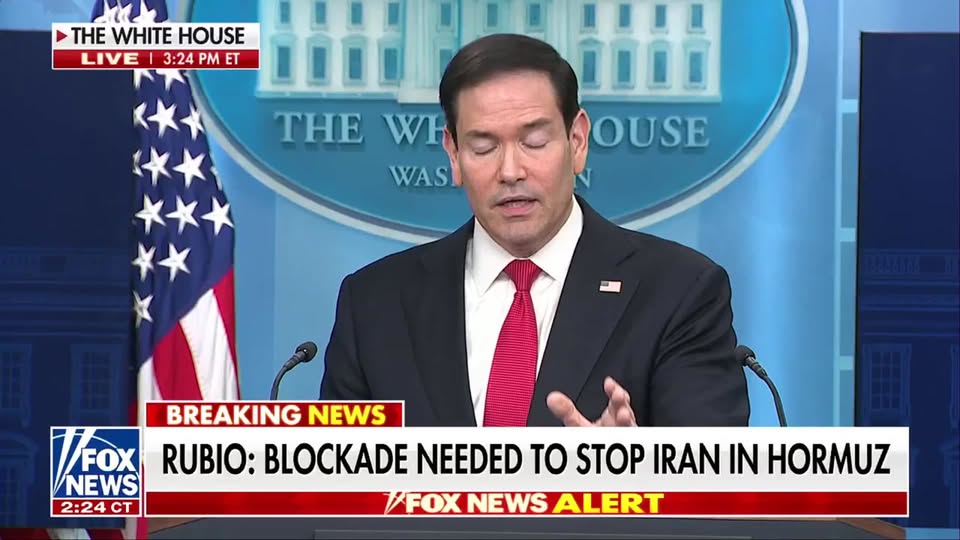
In a recent and assertive statement, U.S. Secretary of State Marco Rubio responded to mounting claims that the United States is imposing an oil blockade on Cuba. Addressing critics and social media narratives, Rubio clarified the situation, emphasizing that the root of Cuba’s oil shortage lies elsewhere, and dismissing allegations of U.S. interference as misleading.
Rubio explained, “Here’s what’s happening with Cuba, okay? Cuba used to get free oil from Venezuela. They would take like 60% of that oil and resell it for cash. It wouldn’t even go to benefit the people. So the only blockade that’s happened is … the Venezuelans have decided we’re not giving you free oil anymore.” This stark clarification shifts the focus from alleged U.S. restrictions to Venezuelan policy decisions that have impacted Cuba’s oil supplies.
The Florida senator further commented on Cuba’s economic struggles, saying, “The reason that I can’t fix it is not just because they’re communist. That’s bad enough, but they’re incompetent communists.” His blunt remarks underscore perceived inefficiencies within the Cuban government and the complexities of the region’s geopolitical landscape.
This controversy has sparked heated debates on social media, with some claiming that the U.S. has imposed strict sanctions aimed at squeezing the communist regime, worsening Havana’s economic crisis. Conversely, Rubio’s remarks highlight that the primary challenge is Venezuela’s withdrawal of oil aid, which Cuba historically relied upon heavily.
Experts note that Venezuela’s own economic and political turmoil has precipitated shifts in its foreign aid, including to allies such as Cuba. The Venezuelan government has faced declining oil revenues amid U.S.-led sanctions and internal instability, leading to reduced oil exports and donations. This has directly affected Cuba’s access to subsidized or free fuel, compounding its ongoing economic difficulties.
International observers and analysts argue that the situation underscores the intertwined nature of regional politics, with Venezuela’s policies indirectly affecting Cuba’s economy. The U.S. administration, meanwhile, emphasizes that sanctions are targeted at governments displaying oppressive behavior rather than ordinary citizens, and that the primary obstacle to Cuba’s economic recovery remains its own governance choices.
As tensions continue, Rubio’s candid explanation aims to dispel misinformation and clarify the actual dynamics at play. The debate highlights the complex web of relationships among Venezuela, Cuba, and the U.S., with each actor influencing the regional stability and economic prospects.