
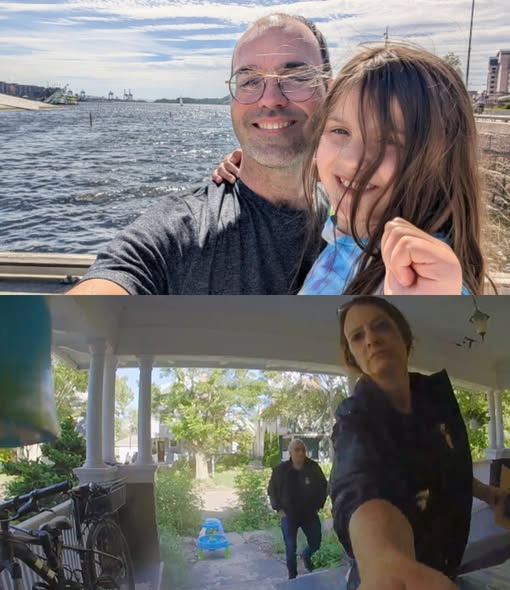
In January, Rochester tech worker David Streever took a moment to voice his outrage after a tragic night in Minneapolis, where federal agents fatally shot two Americans. His email, addressed to the then-head of ICE, Todd Lyons, was nothing more than a pointed personal critique. Streever wrote about how history would judge Lyons and warned of the moral weight of his actions — a stark, calm rebuke with no threats or violence involved.
What happened in the following months shocked many: nearly half a year later, Streever found himself targeted by federal agents who showed up unannounced at his home abroad, and later, at a hotel near JFK Airport. The timing and scope of these visits raised serious concerns about government overreach and the chilling effect on free speech. How did the government locate him? The answer points to the widespread and unchecked sale of personal data from commercial brokers, allowing agencies to track Americans without warrants or judicial oversight.
On June 23, while at a theme park in Finland with his seven-year-old daughter, two Homeland Security Investigations agents knocked on his door, handed over a warning form, and left. His wife, an Episcopal priest, greeted them in her clergy collar with their young child in her arms. The notice suggested Streever might be violating federal law — all based solely on an email.
The same day, an activist in Syracuse received a similar visit at her polling station after criticizing ICE on Instagram. She refused to sign the form, refusing to concede to the government’s intimidation tactics. Then, the story took a more invasive turn. Streever, after flying home, checked into a hotel close to JFK Airport — alone, staying tight-lipped about his whereabouts. Within hours, a third federal agent had tracked him down at the front desk, handing him a business card and prompting fears for his safety and his family’s.
Publicly available information indicates that government agencies acquire Americans’ location data and credit card records from bulk data brokers — often without warrants, without judicial oversight, and with minimal transparency. This secretive system enables agencies to track individuals across states based on their digital footprints, even for a single email that impinges on no laws or threats.
As Streever prepared his daughter for what might be an alarming encounter, he realized that the surveillance and intimidation had backfired. His decision to speak out, rather than suppress his voice, transformed into an unexpected victory: for civil liberties advocates, his story highlights how government overreach can be challenged and exposed.
In an even more ironic twist, Todd Lyons resigned from ICE on May 31 to join the private sector, leaving the email and the controversy behind. Meanwhile, Streever’s ordeal only amplified his message: “It makes me feel like we do have a lot of power.”
This case underscores the importance of privacy rights and the need for transparency regarding government surveillance. It also raises critical questions about how easily citizens can be targeted for simply voicing dissent in the digital age.
Where to Learn More
- NPR: Man Targeted by ICE Over Email After Minneapolis Shooting — June 2023
- The Guardian: How Data Brokers Fuel Government Surveillance — October 2023
- Electronic Frontier Foundation: Targeting Dissent in the Digital Age — September 2023
- The Hill: How Feds Are Tracking Americans Without Warrants — 2023