
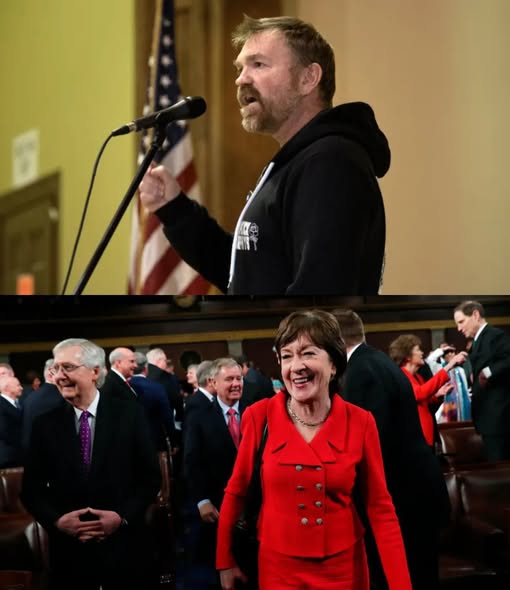
In a surprising turn of political tides, Graham Platner, a seasoned Marine combat veteran and oysterman from the tiny Maine town of Sullivan, is outperforming incumbent Senator Susan Collins by seven points in recent polls. This grassroots surge has ignited a national debate not just about election results, but about what it truly means to be “working-class” in America today.
Platner, who served four combat tours in Iraq and Afghanistan, is earning headlines—not primarily for his military record, but for the stark contrast between his modest lifestyle and Collins’s affluent background. Living in a quaint blue-shingled house in Sullivan, a town with just 1,200 residents, Platner begins his mornings well before dawn working on the water. Most of his income comes from tax-free disability benefits he received for his military service, allowing him to sustain a simple, honest life rooted in his local community. His family helps with everyday needs—his father assisted with his mortgage and his mother supplies oysters sourced from the waters he works daily.
In stark contrast, Senator Collins and her husband, lobbyist Thomas Daffron, are estimated to have a net worth ranging between $4 million and $40 million. Their investments include shares in tech giants like Alphabet, Amazon, Apple, and utility companies such as ConocoPhillips and Johnson & Johnson—all entities Collins has a regulatory voice over in the Senate. This financial disparity has become a focal point in the election, fueling frustrations among Maine voters.
The media’s narrative, as critics argue, has been surprisingly focused on whether Platner is “working-class enough” rather than addressing the substance of his campaign or his policies. The New York Times devoted over 2,500 words scrutinizing his background, asking whether an oysterman from Sullivan qualifies as “authentically working-class.” Meanwhile, coverage of Collins’s political record often emphasizes her personal wealth and corporate ties, with little acknowledgment of her substantial financial interests—like accepting millions from private equity magnate Steve Schwarzman, who rewarded her with campaign contributions while Collins voted on legislation favoring his interests.
For example, Collins received $2 million from Schwarzman on June 27, then immediately cast a decisive vote to advance a Trump-era bill expected to strip health coverage from at least 10 million Americans. In 2017, she floated an amendment to close the carried interest loophole, a favored scheme among billionaires to pay lower taxes, only to drop it and support the tax bill that benefited her wealthy donors—an act critics see as emblematic of a disconnect from her working-class constituents.
Meanwhile, Platner’s story is often framed as quintessentially American—an honest, hardworking veteran living within his means—an image of the “real” America. The narrative suggests that, despite his modest means, Platner embodies the working class because he works with his hands, lives on what he earns, and doesn’t owe decisions to corporate giants like Blackstone.
Polling indicates a significant shift: 57 percent of Maine voters now view Collins unfavorably, a clear reflection of frustration with her aligned interests and questions of authenticity. Supporters of Platner argue that his victory path underscores a growing desire among voters for representatives who genuinely reflect their lives and struggles—not just their campaign coffers.
In this high-stakes political battle, the story isn’t just one of a Senate race; it’s a broader conversation about identity, authenticity, and who truly represents the American “working class.” For many, the oysterman from Sullivan epitomizes that identity far better than a millionaire senator—highlighting a divide that is no longer just economic but cultural and moral.