
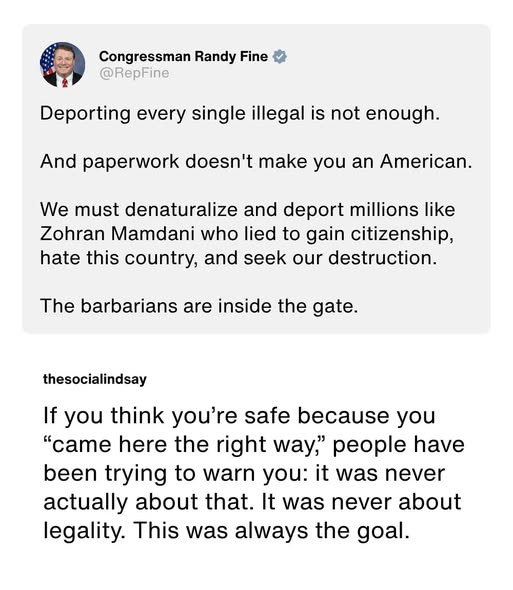
The recent social media post by Florida Congressman Randy Fine has ignited a fierce debate on immigration policy in the United States. In a statement that quickly went viral, Fine asserted, “Deporting every single illegal is not enough. And paperwork doesn’t make you an American. We must denaturalize and deport millions.”
The post, accompanied by an image featuring the bolded quote, has sparked widespread discussion across social media platforms. Critics argue that Fine’s language is inflammatory and risks stoking xenophobia, while supporters claim it underscores the need for stricter immigration enforcement.
Congressman Fine’s stance reflects a hardline approach to immigration, emphasizing the importance of not only deporting those in the country illegally but also stripping citizenship from individuals he deems ineligible. The call to denaturalize and deport has raised questions about the legal and ethical implications of such policies.
Legal experts note that the process of denaturalization is complex and involves rigorous judicial proceedings. According to U.S. law, naturalized citizens can be denaturalized if they obtained citizenship through fraud or misrepresentation; however, broad, sweeping measures targeting populations without due process can be controversial and potentially violate constitutional protections.
While immigration reform remains a hot-button issue in American politics, many civil rights organizations warn that policies targeting individuals based solely on illegal status or ethnicity risk undermining foundational principles of fairness and justice. American Civil Liberties Union (ACLU) leaders have expressed concern that such rhetoric can lead to increased discrimination and racial profiling.
The debate has intensified in light of recent proposed legislation and statements from various lawmakers advocating for more aggressive deterrents against unauthorized immigration. Critics argue that such policies may lead to family separations, judicial abuses, and international criticism, especially if broad denaturalization efforts are pursued without clear legal protections.
Nevertheless, supporters of stricter immigration controls contend that protecting national sovereignty and security requires tough measures. They argue that illegal immigration has profound economic and social impacts, and that enforcement must be prioritized to uphold the rule of law.
As the discussion continues, many are calling for a balanced approach that respects legal processes while addressing concerns over unlawful immigration. Experts agree that any policy shifts must involve careful legal scrutiny and adhere to international human rights standards.