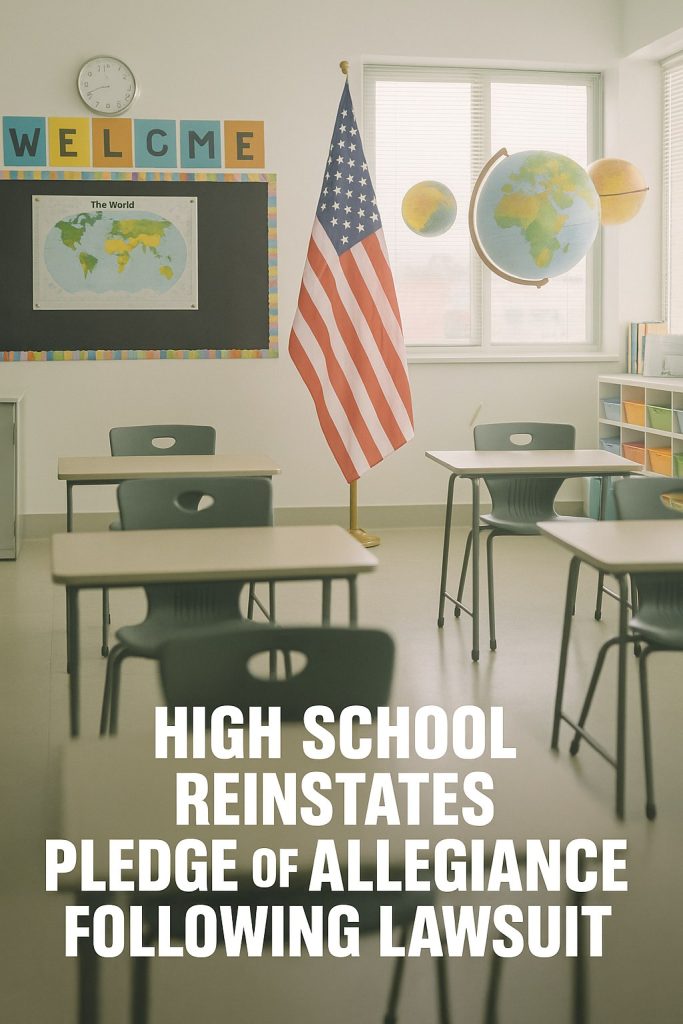
In a stirring victory for advocates of civic tradition, a Maine school district has reinstated the daily recital of the Pledge of Allegiance after a high-profile lawsuit brought by a father and son highlighted the practice’s absence for over two years. The case has reignited conversation surrounding the role of patriotic rituals in public schools and adherence to state law.
The controversy began when the father, supported by his son who attends the local high school, noticed the Pledge of Allegiance was no longer a part of the school’s daily routine. After confirming the tradition had been skipped for two consecutive years, the family took legal action, arguing the district’s omission was a clear violation of Maine’s statutes that encourage or mandate the Pledge in educational settings.
Attorneys representing the family emphasized that the school district only relented and resumed the daily recital once faced with legal pressure. “This outcome is a victory for robust civic education,” one attorney remarked, underscoring the importance of such traditions in cultivating patriotism and community awareness among young people.
According to state law, while the Pledge of Allegiance is not explicitly mandatory in every classroom, schools are generally expected to provide opportunities for students to engage in the daily ritual, fostering respect for the flag and the nation’s ideals. The two-year pause had sparked debate among parents, educators, and legal experts about the line between secular education and patriotic expression.
Many supporters of the reinstatement hailed the decision as a reaffirmation of shared values and an important daily reminder of citizenship. Opponents, however, have at times questioned whether mandatory or highly encouraged recitals impinge on individual freedom of expression or alienate students from diverse backgrounds.
The school district issued a brief statement following the lawsuit resolution, confirming the Pledge of Allegiance has returned to the daily schedule and expressing intent to comply fully with state requirements going forward. “Our priority remains providing an inclusive, respectful environment that honors both tradition and diversity,” the statement read.
This case is emblematic of a broader national discourse on how schools navigate patriotic observances amidst shifting cultural sensitivities. For now, the Maine family’s legal challenge has set a precedent, reminding educational institutions of their responsibilities related to civic rituals and patriotic education.
As the school year progresses, the renewed practice of saying the Pledge in classrooms will likely be monitored by others seeking to uphold or revisit similar traditions in their communities.