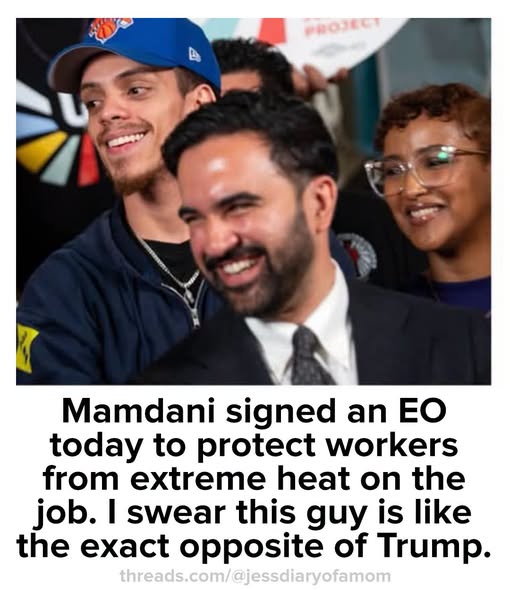
In a bold move that signals a shift toward strongerworker protections, Mayor Mamdani signed an executive order (EO) today aimed at safeguarding workers from the dangers of extreme heat during the sweltering summer months. The new policy is being hailed as a crucial step in addressing climate resilience and prioritizing worker safety in a rapidly warming world.
The executive order mandates stricter safety protocols for outdoor and heat-exposed indoor workers, including mandatory rest breaks, access to hydration, and the provision of shaded areas. It also requires employers to implement heat illness prevention plans, conduct training sessions, and monitor workers for signs of heat-related illnesses.
What sets this initiative apart? Many social media users quickly pointed out that Mamdani’s approach contrasts sharply with national trends led by figures like former President Trump, whose administration was often criticized for rolling back worker protections and environmental regulations. In the viral post, one observer exclaimed, “I swear this guy is like the exact opposite of Trump,” highlighting Mamdani’s commitment to proactive and protective policies for laborers.
“This is about saving lives and showing real leadership,” Mamdani stated during the signing ceremony. “Our workers deserve to be protected from preventable heat injuries, and we are taking concrete steps to make sure that happens.” The mayor emphasized that the EO aligns with broader climate adaptation efforts and reflects a commitment to public health and worker dignity.
The move has garnered widespread praise from labor advocates, environmental groups, and community members. Many see this as a pivotal moment, especially in regions experiencing record-breaking temperatures like the Southwest and Southeast United States. The policy also encourages local businesses to adopt heat-mitigation strategies voluntarily, fostering a culture of safety and resilience.
Critics, however, have raised concerns about enforcement and potential economic impacts on employers, particularly small businesses. Nevertheless, proponents argue that protecting workers’ health is a public responsibility, and the long-term benefits—fewer heat-related illnesses and lower healthcare costs—outweigh the initial adjustments.
This landmark EO signals an important shift in local policy toward prioritizing human health in the face of climate change. As temperatures continue to rise, initiatives like Mamdani’s serve as vital models for municipalities nationwide aiming to create safer, more sustainable work environments.
Where to Learn More
- How Cities are Protecting Workers from Climate-induced Heat Risks – The New York Times
- US Cities Take Lead on Protecting Workers from Extreme Heat – BBC News
- Occupational Safety and Health Administration: Protecting Workers from Heat Illness – OSHA
- EPA Climate Change and Health – Environmental Protection Agency