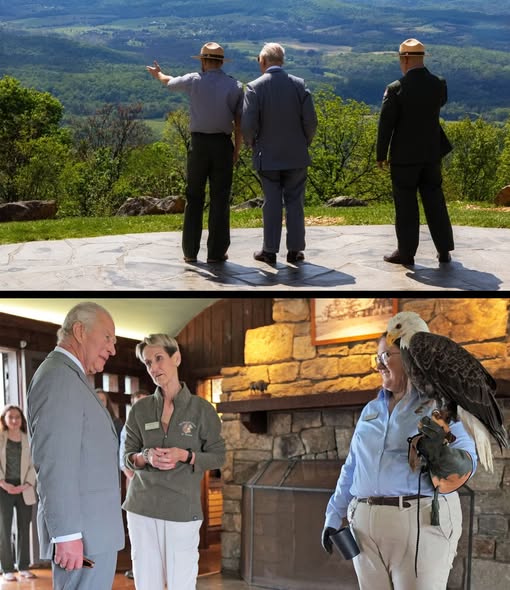
In a moment that flew under the radar but carried profound significance, King Charles III demonstrated a genuine and heartfelt commitment to conservation during the final days of his historic visit to the United States. Instead of a typical diplomatic gesture, the British monarch chose to spend time at Shenandoah National Park in Virginia, engaging directly with the natural landscape and those dedicated to its preservation.
Amidst official ceremonies and diplomatic meetings, Charles quietly immersed himself in the wonder of America’s public lands. He sat alongside park rangers, swore in a group of Junior Rangers — bright young conservationists of the future — and visited Buddy, the famed bald eagle emblematic of U.S. wildlife. Perhaps most notably, he unveiled stones marking a new conservation partnership between Shenandoah National Park and Scotland’s Cairngorms — a symbol of cross-continental environmental collaboration rooted in shared respect for nature.
This gesture is emblematic of a man who has long championed environmental causes, dating back over five decades. In 1986, Charles converted his own estate to organic farming — a move initially met with mockery by British tabloids, yet one he persisted with unwavering resolve. His commitment has never wavered, even when some questioned his priorities or mocked his voice on ecological issues. His genuine curiosity and warmth during this recent visit serve as a reminder that true conservation leadership often requires humility and quiet action rather than headlines.
While the world widely heralded this act of kindness and ecological diplomacy, it received surprisingly little media coverage. Yet, that silence speaks volumes. When a foreign monarch, dedicated to environmental preservation, visibly honors America’s cherished public lands — lands that are increasingly under threat — we must ask: where is our own leadership?
Compare Charles’s simple yet profound focus on nature with the approach often seen in the United States, particularly during the tenure of former President Donald Trump. The former president’s policies gutted protections for public lands, opening millions of acres to commercial logging, strip mining, and private development—measures that threaten ecosystems, indigenous communities, and future generations. While King Charles quietly engaged with nature in Virginia, the U.S. government was busy undermining the very lands that should be preserved for everyone’s benefit.
This contrast is stark. A visiting monarch exhibits curiosity, respect, and genuine warmth toward America’s natural treasures — qualities essential for effective conservation. Meanwhile, federal policies have reflected an obsession with resource extraction and profit over preservation. The fact that a foreign king cares more visibly about these forests than America’s own leader is, frankly, a wake-up call for those concerned about the country’s environmental future.
This quiet act of kindness from Charles underscores a simple truth: protecting our planet requires more than words — it demands action, empathy, and leadership. As public lands face unprecedented threats, perhaps it’s time for the United States to look inward and recommit to valuing the land that sustains us all.
Where to Learn More
- King Charles’s Visit to Shenandoah Highlights Conservation Diplomacy – National Parks Traveler
- King Charles’s Lifelong Environmental Advocacy – The Guardian
- The Nature Conservancy: Protecting Global Ecosystems
- How Policies Under Trump Reduced Public Land Protections – Union of Concerned Scientists