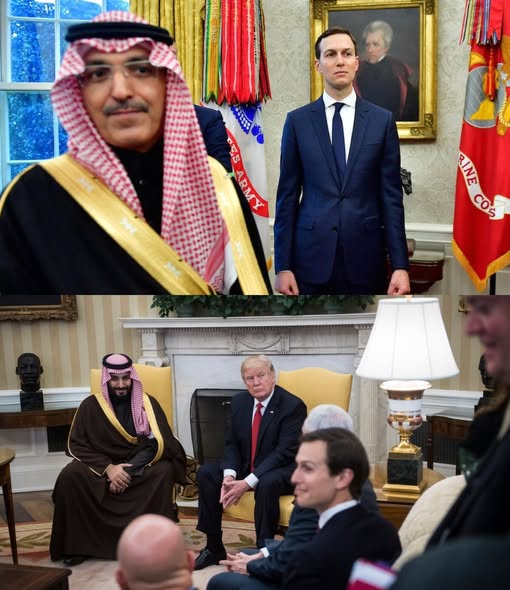
In a story that reads like a geopolitical thriller, new evidence suggests that Jared Kushner, President Trump’s son-in-law and one of the administration’s key Middle East envoys, is at the center of a complex web of influence, conflict, and potential conflicts of interest surrounding the ongoing U.S. confrontation with Iran.
While Kushner has been actively involved in negotiating a ceasefire or de-escalation in the Iran conflict—flying alongside other envoys like Steve Witkoff to seek diplomatic solutions—he is simultaneously engaged in raising billions of dollars from Gulf nations through his private equity firm, Affinity Partners. This raises serious questions about conflicts of interest, considering the very countries funding Kushner’s private ventures are also deeply involved in the regional war that has devastated the Middle East.
According to documented reports, in 2021—just six months after leaving the White House—Kushner’s firm secured a staggering $2 billion investment from Saudi Arabia’s Public Investment Fund. Notably, internal screening panels recommended against the deal, citing concerns about Affinity’s management inexperience, the Saudi government bearing the majority of the risks, and potential PR fallout from Kushner’s White House role. Despite these warnings, Crown Prince Mohammed bin Salman personally overruled the objections, pouring the funds into Kushner’s fund.
Since then, Affinity Partners has collected over $157 million in management fees, with approximately $87 million coming directly from Saudi government sources. Today, the firm manages roughly $6.16 billion in assets, nearly all from foreign investors, including the UAE and Qatar—nations directly entangled in the Iran war. The UAE, for instance, has faced over 550 ballistic missile attacks and more than 2,200 drone strikes amid regional instability.
This begs the question: how can Kushner effectively serve as a neutral peace envoy while simultaneously profiting from ongoing conflict? Critics argue that his financial entanglements may influence U.S. policy decisions, creating a conflict of interest that could prolong the war rather than end it.
Indeed, investigations by Senator Ron Wyden’s Senate Finance Committee have suggested that Kushner’s investment activities might be motivated less by commercial interests and more by opportunities for foreign governments to funnel money to his family—raising serious ethical concerns. Meanwhile, as of last week, Kushner’s firm has yet to return any profits to its investors.
Politicians on both sides have begun scrutinizing Kushner’s dual roles. Congressman Jamie Raskin recently launched a House Judiciary investigation, explicitly criticizing Kushner’s apparent “conflict of interest” and the inability to “faithfully represent the United States while being a financial pawn” for Gulf monarchies.
White House ethics experts have echoed these concerns. Norm Eisen, a former White House ethics counsel under Obama, bluntly described Kushner’s situation as “the ticket to the World Series of corruption,” citing his multi-billion dollar interests in a region embroiled in war.
The deadly toll of this ongoing conflict is undeniable: 13 American troops killed, thousands of Iranians and Lebanese casualties, soaring gas prices (at $4.05 per gallon), and the vital Strait of Hormuz effectively closed—crippling global oil supplies and markets.
Meanwhile, the very man tasked with negotiating an end to the chaos, Kushner, appears to be financially intertwined with the interests of nations that benefit from continued conflict. Critics warn that this dangerous intertwining of diplomacy and private financial interests risks prolonging a devastating war that has already exacted a heavy human and economic toll.
Where to Learn More
- Kushner’s Saudi Deal and Iran Negotiations: A Conflict of Interest? – The New York Times
- Foreign Investments into Kushner’s Firm Spark U.S. Ethics Questions – The Washington Post
- Congress Launches Probe into Kushner’s Foreign Funding and Middle East Role – CNN
- Kushner’s Firm Raises Billions from Gulf Nations Amid U.S. Iran Tensions – Bloomberg