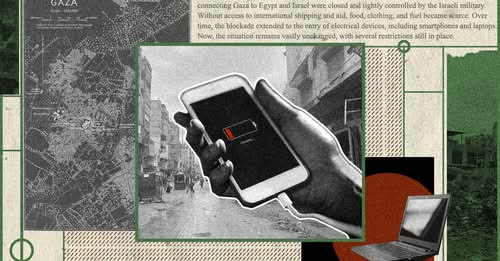
Recent Israeli restrictions on the entry of electronic devices into Gaza have caused significant upheaval for students, freelancers, and the broader civilian population seeking to sustain educational and economic activities amid ongoing conflict. These tighter controls, implemented amidst heightened security concerns, have left many in the coastal enclave grappling with unprecedented digital hardships.
Since the restrictions were enforced, residents report that obtaining crucial electronic devices—such as laptops, smartphones, and related accessories—has become exceedingly difficult. Officials at border crossings now impose stringent limitations, resulting in delays, confiscations, and outright denials of entry. This crackdown, according to sources, aims to curb the potential use of electronic devices for militant activities, but it inadvertently hampers innocent civilians’ access to productivity tools vital for their daily lives.
Students have felt the brunt of this development acutely. Many rely heavily on electronic devices for remote learning, academic research, and communication with teachers and peers outside Gaza. With their digital resources stifled, students face mounting challenges in keeping up with their studies, risking the prolongation of educational disruptions caused by the ongoing conflict and previous blockade measures.
Meanwhile, freelancers and small business owners—who often operate remotely, utilizing laptops and high-speed internet—find their livelihoods jeopardized. As freelance work is increasingly digitized, the inability to access or import necessary hardware and tools curtails their capacity to serve clients worldwide, leading to economic losses and diminished prospects for rebuilding Gaza’s economy.
Beyond economic implications, many residents express feelings of frustration and helplessness. “It feels like we’re being cut off from the world,” said a Gaza-based internet entrepreneur. “Our work depends on having access to technology, and these restrictions make it almost impossible to compete on a global scale.”
Human rights organizations and local activists have criticized the restrictions, emphasizing their disproportionate impact on civilians who have little say in security policies. They call for a reassessment of border procedures to balance security concerns with the urgent need for civilian access to essential digital tools, particularly as Gaza contends with continued hardships including power shortages and limited internet connectivity.
This situation underscores the complex challenge of maintaining security without hampering the fundamental rights to education and economic opportunity. As Gaza’s population navigates this digital blockade, international voices urge for a revisited approach—one that preserves security while respecting the rights of civilians to innovate, learn, and work without undue hindrance.
Where to Learn More
- Human Rights Watch Report on Gaza Electronic Restrictions – Human Rights Watch
- BBC Coverage on Gaza Border Controls and Impact on Civilians – BBC News
- Al Jazeera Analysis of Gaza’s Digital Struggles Amid Security Policies – Al Jazeera