
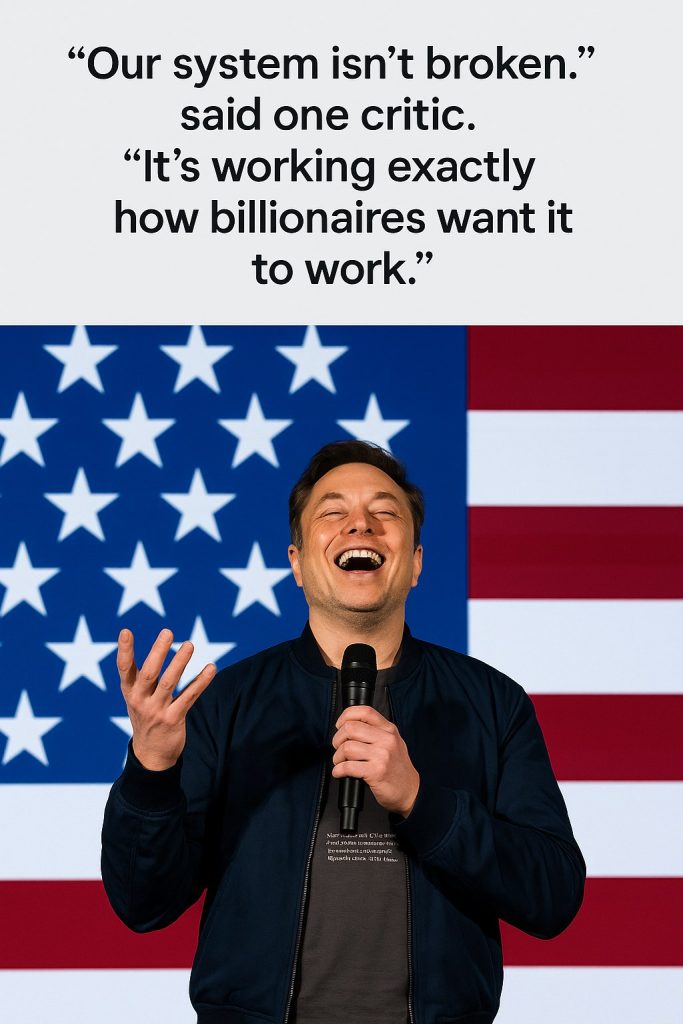
As social media continues to serve as a platform for vibrant discussions around economic inequalities, one provocative statement has ignited a firestorm of debate: “Our system isn’t broken; it’s working exactly how billionaires want it to work.” This bold assertion, made by a progressive critic during a recent online forum, encapsulates a growing sentiment among advocates for economic reform.
The comment comes in the wake of mounting evidence that suggests wealth in the United States— and globally— is becoming increasingly concentrated within the hands of a select few. Think tanks and research institutions have been vocal about the disparities between the average worker’s wage and the burgeoning fortunes of billionaires, prompting experts to weigh in on the true functionality of our economic system.
According to a study from the Institute for Policy Studies, the wealth of America’s billionaires increased by over $1.2 trillion during the pandemic alone. This stark rise stands in contrast to the struggles faced by many Americans, who are grappling with rising inflation and stagnant wages, contemplating whether the system is indeed “working” for them.
Advocates for economic reform argue that the current system is not a failure in its design, but a resounding success for its intended beneficiaries. “It seems to operate flawlessly for those at the top,” noted economic analyst Dr. Sarah Cavanaugh. “The policies put in place favor those with wealth and power, often at the expense of the broader public.” This sentiment is echoed across social media platforms, where hashtags such as #WealthInequality and #BillionaireClass have gained traction.
Critics of the system emphasize that the issue isn’t merely about broken policies; it’s also about a deeply entrenched status quo. The influence of billionaire donors in political campaigns further complicates the scenario. Campaign finance issues have led to accusations of oligarchy, as vast sums of money can sway elections and governmental priorities, ensuring that laws often favor corporate interests over the needs of everyday citizens.
Furthermore, studies reveal that the top CEOs are making 351 times the average worker’s salary, a staggering ratio that illustrates not only economic disparity but also the imbalance of power within the workforce. This has prompted calls from various quarters for fundamental changes, including higher taxes for the ultra-rich, a living wage for all workers, and policies aimed at wealth redistribution.
Despite these challenges, there remains a flicker of optimism among progressives. Grassroots movements are gaining momentum as more individuals recognize the need for systemic change. Organizations like Fight for $15 and Our Revolution are mobilizing supporters to advocate for policies that promote social and economic justice.
As conversations surrounding wealth concentration continue to unfold online, the question remains: How do we redefine a system that seems to serve the interests of a few over the many? For progressive activists and their supporters, the journey toward fairness and equity is just beginning. The debate is far from over, and the stakes have never been higher.
Where to Learn More
- The Rise of America’s Billionaires – Institute for Policy Studies
- CEO Pay: How it Affects the U.S. Economy – Economic Policy Institute
- The 1 Percent: Trends and Impacts on Society – Brookings Institution
- How Billionaires Have Fared During COVID-19 – The New York Times