
Iran said it targeted U.S. drone and missile installations at Kuwait’s Ali Al Salem air base overnight, hours after American fighter jets struck an Iranian missile launch site on Qeshm Island in the Strait of Hormuz. According to Reuters, it is Tehran’s first attack on the U.S.-allied Gulf state since September.
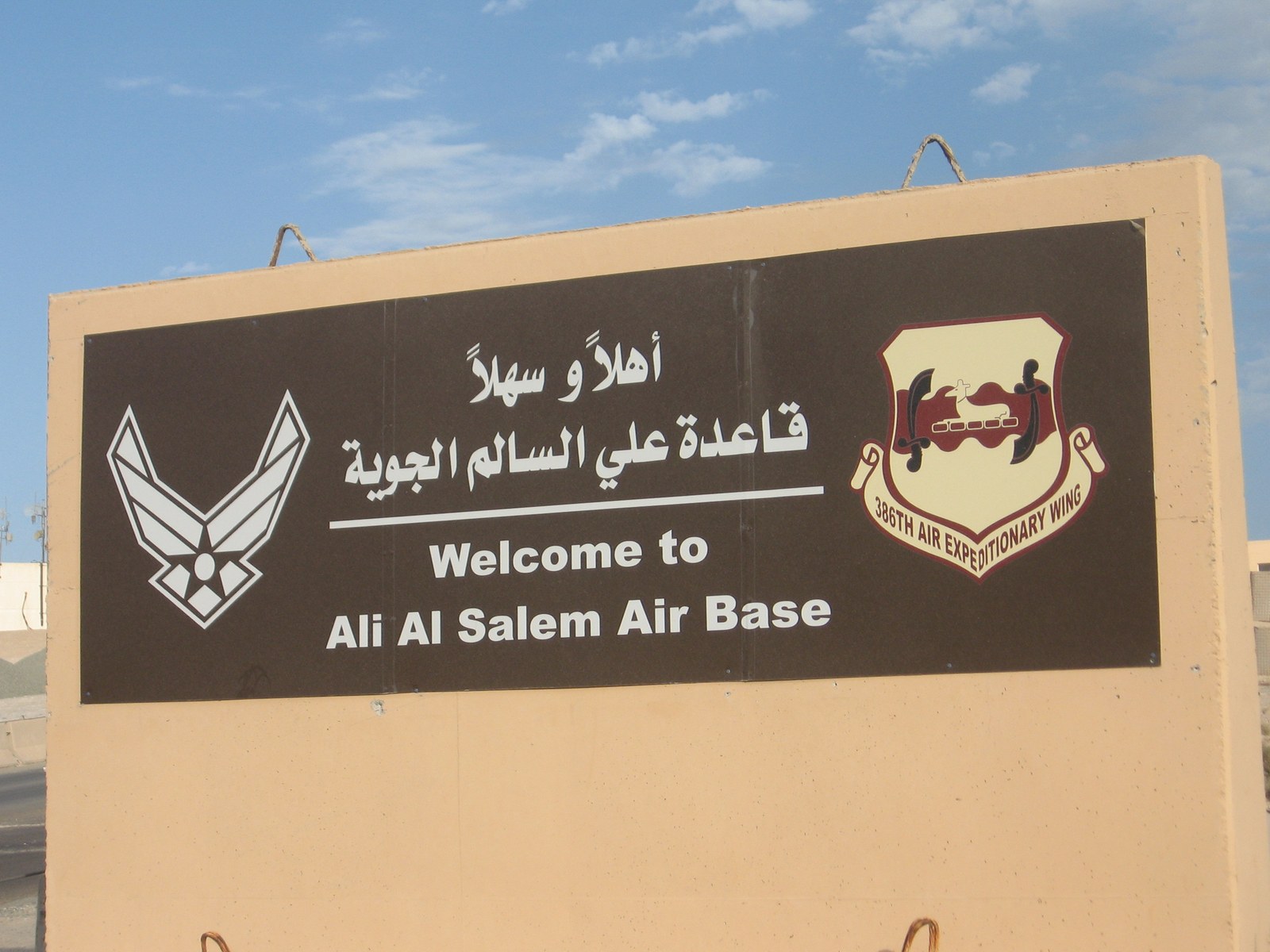
The Associated Press described the early Wednesday strikes as Iran widening its attacks on its Gulf neighbors, targeting a U.S. air base in Kuwait and launching several attacks on Bahrain in what appeared to be retaliation for the American strike the day before.
What Iran says it hit
The Iranian army said it targeted U.S. drone and missile installations at Ali Al Salem, Reuters reported. In the attack, the Iranian Army fired at air defense systems as well as drone and missile launch platforms, according to a report on Iran’s state broadcaster cited by the AP.
Kuwait: air defenses intercepted the drones
Kuwait said its air defenses were countering hostile drone attacks. Kuwait’s Army said its air defenses had intercepted the drone attacks and did not immediately report any damage, the AP reported.
The country’s Foreign Ministry condemned the repeated Iranian attacks as “criminal,” saying they threatened Kuwait’s security and stability, according to the AP. Kuwait said it reserved the right to take all necessary measures to safeguard its sovereignty and protect its territory and vital facilities against any aggression or threat, Reuters reported.
During the war, Ali Al Salem Air Base was struck at least 30 times by Iran, damaging or destroying at least 15 aircraft hangars, numerous warehouses and 10 buildings near a residential area, according to an earlier AP report.
The U.S. strike on Qeshm Island
The Kuwait attack followed U.S. airstrikes on Tuesday evening, when American fighter aircraft targeted a missile launch site on Qeshm in retaliation for Iranian attacks on U.S. personnel and assets, a U.S. military official told Reuters. The AP said the target was a Revolutionary Guard missile launch site, and that the U.S. strike was in retaliation for an Iranian attack on an American radar installation in Bahrain earlier Tuesday.
Iranian media, citing an Iranian official, said the U.S. attack caused no damage to infrastructure, according to Reuters. The U.S. military did not immediately respond to the AP’s request for comment on the latest attacks.
Bahrain intercepts attacks for a third time in a week
Bahrain said it intercepted Iranian aerial attacks on Wednesday for a third time in a week, accusing Tehran of a “systematic hostile approach” toward the Gulf kingdom, where the U.S. Navy’s Fifth Fleet is headquartered, Reuters reported.
Bahrain’s Ministry of the Interior issued two alerts early in the morning urging people to take shelter, followed by the “all clear” a short time later, the AP reported. The country’s military later said it had intercepted a number of attacks from Iran but gave no information on any damage or casualties.
Iran said its recent attacks, including those on other U.S. facilities in Bahrain on Sunday and Friday, were in response to U.S. drone surveillance operations and an attack on Iranian communications towers, according to the AP.
Iran’s army chief warns of a “more crushing” response
In videos published by Iranian state media on Wednesday, Iranian Army Commander-in-Chief Amir Hatami issued a fresh warning to the United States, Reuters reported.
“If the enemy repeats its mistake… we have the readiness and the plans to confront it and its supporters in a stronger, more crushing way and without geographic limitations.”
Iranian Army Commander-in-Chief Amir Hatami, as reported by Reuters
“Cautious” escalation, or something bigger?
Hasan Al Hasan, a senior fellow for Middle East policy at the International Institute for Strategic Studies, told Reuters that Iran was undertaking a “cautious” escalation.
“But there is no ruling out further escalation, especially if the US begins to widen military operations, begins to widen its target set to include not just Iranian military coastal infrastructure, but also more deeply within Iran.”
Hasan Al Hasan, International Institute for Strategic Studies, to Reuters
Hamidreza Azizi, senior Iran analyst at the International Crisis Group, wrote that “even if neither side intends to enter a broader confrontation, the accumulation of military incidents across multiple fronts increases the risk of miscalculation and escalation beyond what either side originally intended,” the AP reported.
Danny Citrinowicz, a researcher at Israel’s Institute for National Security Studies, wrote in an analysis on X cited by the AP that “Iran appears to be pursuing a strategy of deliberate, calibrated escalation,” adding that the objective “is not necessarily to trigger an all-out war, but to steadily increase the military, economic, and political costs of maintaining the blockade.”
The bigger picture
The United States and Israel attacked Iran on Feb. 28, and Tehran responded with strikes on Israel and on Gulf states hosting U.S. military bases, according to Reuters. Global oil and gas prices have climbed with shipping through the Strait of Hormuz severely disrupted after Tehran declared it closed, while the U.S. has imposed a naval blockade on Iran.
The AP reported that President Donald Trump has sent mixed messages on his next steps, saying new strikes are highly unlikely while also sending a third aircraft carrier and thousands more troops to the Middle East.
Elsewhere in the region, the UAE’s ADNOC said one crew member was missing and 11 were injured after one of its vessels was attacked in the Strait of Hormuz on Tuesday, and Saudi air defenses intercepted cruise missiles that Yemen’s Houthi rebels fired toward Riyadh, according to Reuters and the AP. Qatari and Iranian officials met on Tuesday for talks aimed at narrowing the gap between proposals, Reuters reported.
This is a developing story.