
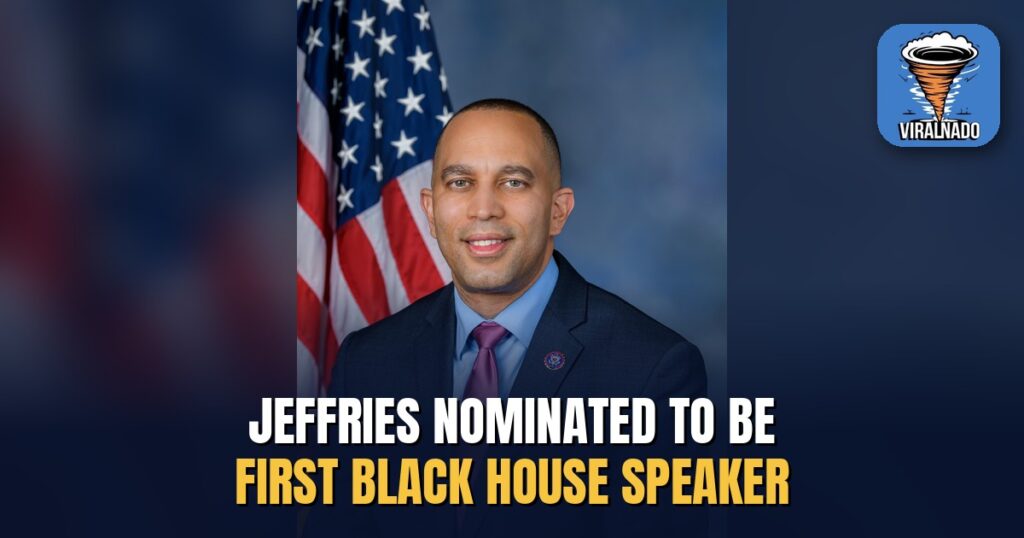
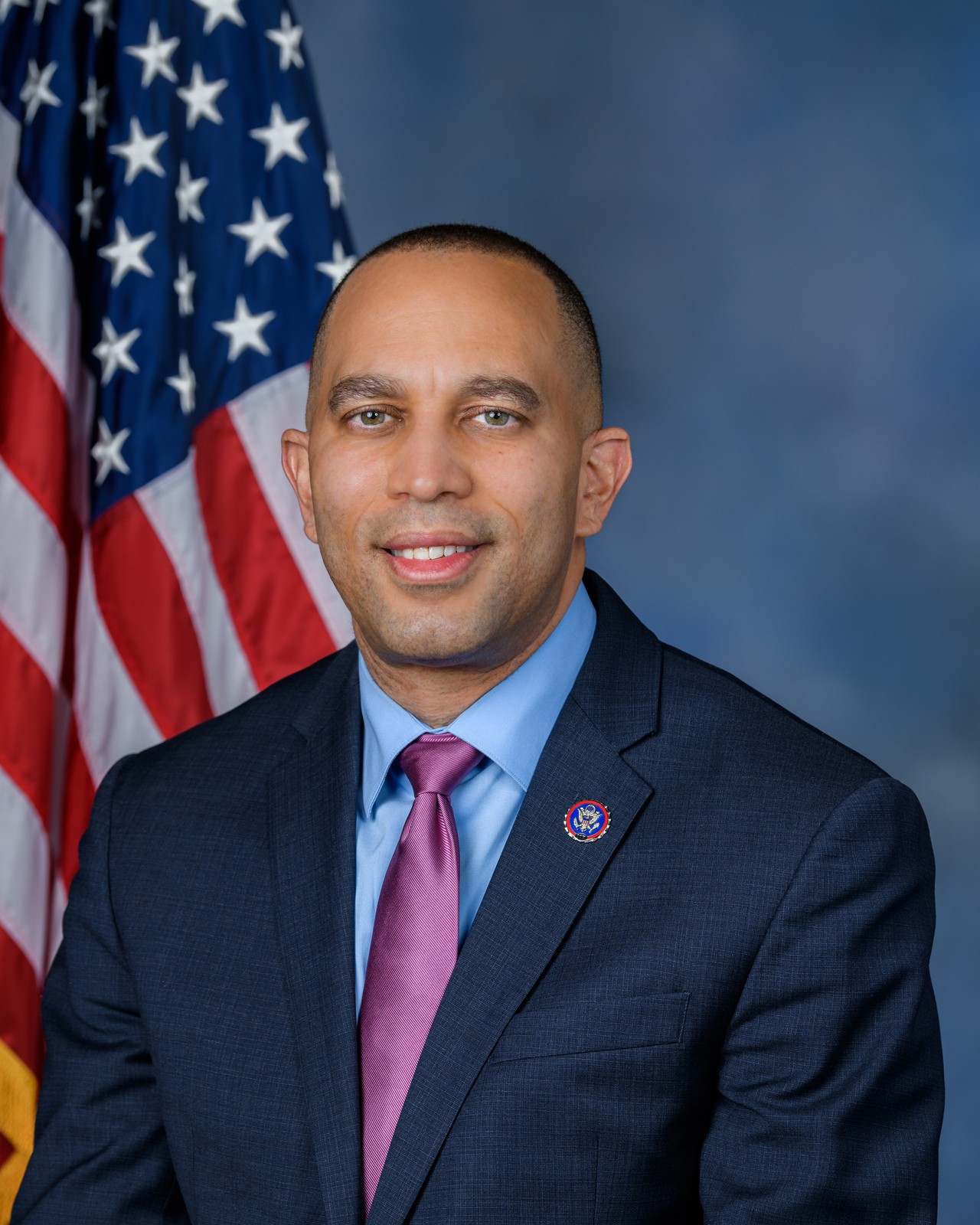
House Democrats on Wednesday, Nov. 18, nominated Rep. Hakeem Jeffries of New York to be the next speaker of the House, putting him on track to become the first Black speaker in American history when the new Congress convenes in January.
Jeffries won the closed-door, secret-ballot vote of the incoming Democratic caucus 251-11, according to NBC News, The Washington Post and Roll Call. No challenger ran against him.
“The people of this country are demanding bold, dramatic and transformational change,” Jeffries told reporters after the vote. “The status quo is unacceptable, and we’re committed to delivering in a meaningful way the type of change that the American people deserve, so that everyone in this country can live an affordable life, a comfortable life and a good life.”
Not just one first: a leadership team full of them
Jeffries won’t be the only history-maker at the top of the new Democratic majority. In uncontested races on Wednesday, House Democrats elected:
- Rep. Katherine Clark of Massachusetts as majority leader, the No. 2 job. She will be the first woman elected to that role in either chamber of Congress.
- Rep. Pete Aguilar of California as majority whip, the party’s top vote counter and No. 3 leader. According to NBC News, no Hispanic American lawmaker has ever climbed higher in the House.
- Rep. Ted Lieu of California as caucus chair, the No. 4 post. He will be the first Asian American to hold the job.
- Rep. Joe Neguse of Colorado as assistant speaker. NBC News reports that at 42, he will be the youngest lawmaker in congressional history to hold the position. He is also the first Black member of Congress in Colorado’s history.
Why the 251-11 number matters
The caucus vote is only a nomination. The full House formally elects the speaker on the first day of the new Congress, Jan. 3, and the winner needs 218 votes.
That shouldn’t be a problem. NBC News projects that Democrats will hold 259 seats, the largest House majority in 35 years. That means Jeffries could lose roughly 40 Democratic votes and still win the gavel. Compare that with 2023, when Republican Kevin McCarthy, working with a razor-thin 222-212 majority, needed 15 ballots to become speaker.
The lopsided result was also a show of strength inside his own party. Jeffries had faced grumbling from some progressive members and activists who wanted new and bolder leadership, NBC News reported, but none of them mounted a challenge. Jeffries had asked for a recorded vote so the tally would be public, though the secret ballot means individual votes stay private.
Asked whether he needed to win over the Democrats who voted against him, Jeffries said “the results of today’s election speak for themselves.”
“Our job is to fight MAGA extremism, not each other,” he said, “and to get big things done for the American people.”
Who put his name forward
Jeffries, 56, is a Brooklyn native, a former attorney and a former New York state lawmaker who has led House Democrats since 2023. He was nominated Wednesday by five colleagues meant to reflect the breadth of the caucus: Reps. Teresa Leger Fernández of New Mexico, Derek Tran of California and Mark Pocan of Wisconsin, Rep.-elect Rebecca Bennett of New Jersey, and former Majority Whip Jim Clyburn of South Carolina, one of Jeffries’ political mentors.
Watch: Jeffries speaks after winning the nomination
What happens next
Jeffries remains minority leader, and Clark remains minority whip, through the end of the current Congress. On Jan. 3, the full House will vote, and if Democrats hold together as expected, Jeffries will take the gavel as the first Black speaker of the House.
Viralnado will update this story as the new majority takes shape.
Reporting draws on NBC News, the Associated Press, CBS News, The Washington Post and Roll Call.