
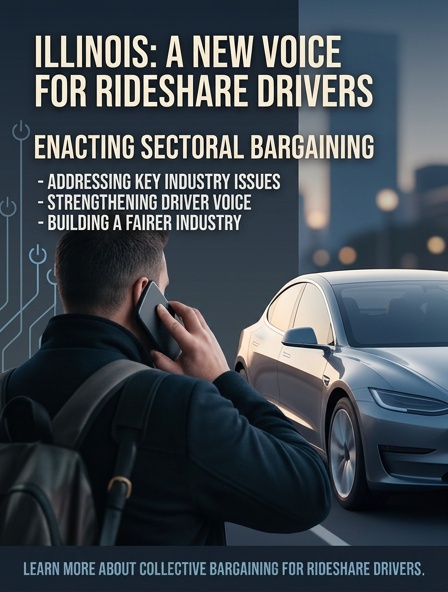
Illinois announces groundbreaking policy change, becoming the third state in just two years to adopt sectoral bargaining for rideshare drivers. This significant legislation empowers gig economy workers to form unions and negotiate collectively with platforms like Uber and Lyft, addressing longstanding industry issues such as wages, working conditions, and benefits.
As the gig economy continues to expand across the nation, debates over worker rights and employer accountability have intensified. Rideshare drivers, often classified as independent contractors, have historically lacked the protections and bargaining power of traditional employees. This has led to ongoing concerns over fair pay, job security, and workplace safety amid rising ride demand and industry competition.
Illinois’s move marks a pivotal shift in labor policy, aligning with similar efforts in New York and California, which have also adopted sectoral bargaining frameworks. The legislation allows rideshare drivers to organize into unions within their respective states, giving them a collective voice to negotiate with platform companies through sectoral agreements that set industry-wide standards.
The law aims to create a more level playing field. By implementing sectoral bargaining, Illinois hopes to address disparities in pay, establish safety protocols, and improve working conditions for drivers. advocates argue that this move could serve as a model for other states grappling with similar industry challenges.
Union advocates and labor leaders have welcomed the legislation, emphasizing its potential to elevate gig workers from marginal status to a recognized workforce with rights and protections. “This is a historic step toward fair treatment for rideshare drivers,” says Sarah Martinez, director of the Illinois Drivers Union. “Drivers finally have a mechanism to voice their concerns and push for meaningful change.”
Critics, however, warn of potential legal and economic complications, arguing that sectoral bargaining could lead to increased operational costs for ride-hailing companies, which might result in higher fares for consumers or reduced driver flexibility. Nonetheless, supporters contend that fairer wages and safer working environments ultimately benefit both drivers and passengers.
Illinois’s legislation arrives at a crucial time as the gig economy faces mounting scrutiny from policymakers, labor advocates, and industry leaders. With more states considering similar reforms, the landscape of gig work is poised for transformation—potentially redefining worker rights and industry standards nationwide.