
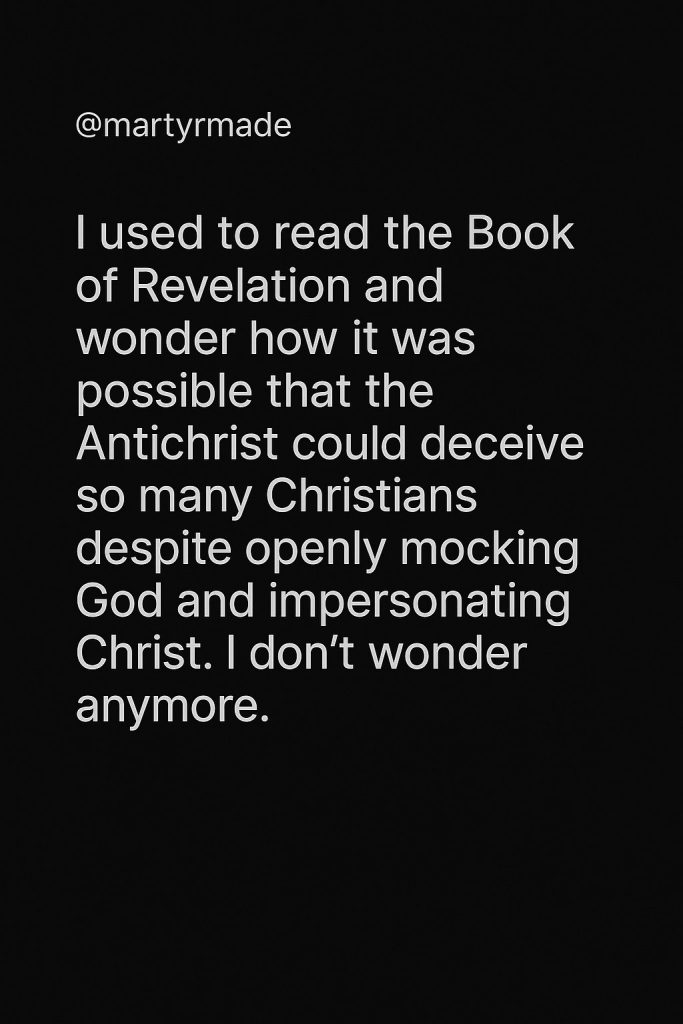
Recently, a thought-provoking statement from social media user @martyrmade has sparked widespread discussion among Christians and scholars alike. The post reads, “I used to read the Book of Revelation and wonder how it was possible that the Antichrist could deceive so many Christians despite openly mocking God.” This simple but profound reflection has resonated deeply with many who wrestle with the complex themes of faith, deception, and prophecy in one of Christianity’s most enigmatic texts.
The Book of Revelation, often shrouded in symbolism and apocalyptic imagery, describes the rise of a malevolent figure commonly identified as the Antichrist. This character is said to perform miraculous signs, deceive multitudes, and oppose God in a final period of tribulation. But what remains striking to readers is how this being could so convincingly mislead devout believers, despite engaging in what seems like blatant sacrilege.
Religious scholars suggest that the deception described is not merely about overt mockery but rather the subtle manipulation of faith, hope, and trust. The Antichrist, according to various interpretations, uses a combination of charisma, false miracles, and a counterfeit peace to sway even those firmly rooted in their beliefs. This insight helps explain why the warning in Revelation is so urgent: believers must remain vigilant and discerning to avoid being led astray.
Moreover, historical context reveals that early Christians faced persecution and significant upheaval, which made them vulnerable to any figure promising relief or order—even if that figure contradicted their doctrine. The psychological appeal of such promises can override outright offenses against faith. As social media users like @martyrmade express, this paradox is one of the reasons the Book of Revelation continues to be deeply relevant and challenging.
In contemporary times, this viral reflection invites readers to consider the nature of deception in both spiritual and secular arenas. It prompts an examination of how people can be misled not just by blatant antagonists but also by those who exploit faith through sophisticated ploys—whether religious, political, or social.
Ultimately, the public reaction to this simple statement highlights a larger conversation about faith, skepticism, and the human tendency toward belief in charismatic leadership. It reminds us that vigilance and critical thinking are essential virtues, especially when confronted with complex, often contradictory, signs and messages.
Whether you approach the Book of Revelation from a religious, academic, or cultural standpoint, the question posed by @martyrmade serves as an entry point into important discussions about belief, deception, and the enduring power of prophecy.
Where to Learn More
- Antichrist – Encyclopaedia Britannica – Encyclopaedia Britannica
- Interpretation: A Bible Commentary for Teaching and Preaching – Revelation – Bible Gateway
- The Antichrist – Desiring God
- Who is the Antichrist? – History – History.com