On the very first day of his second term, former President Donald Trump signed an executive order that largely flew under the radar—yet its impact is undeniable. This order effectively dismantled efforts to clamp down on international tax abuse, enabling multinational corporations to stash at least $40 billion in profits offshore without paying a dime in U.S. taxes.
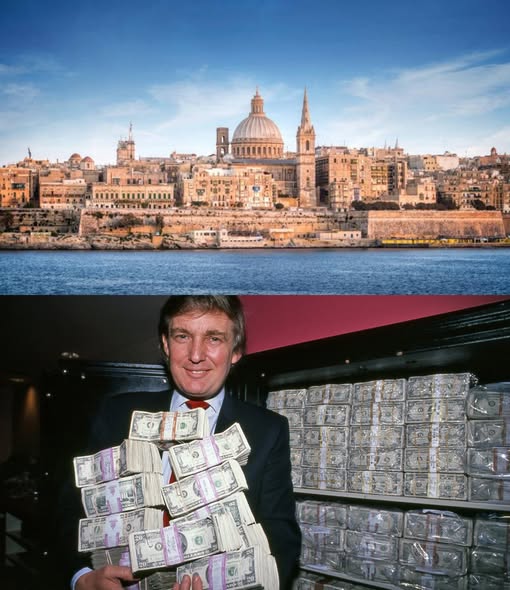
A New York Times investigation analyzed filings from nearly 500 major companies, revealing a staggering pattern: since the start of 2025, corporations have moved billions into countries like Malta, Bermuda, Cyprus, and the Cayman Islands—jurisdictions with no local tax obligations and no physical presence. These profits can now be held indefinitely, with no accountability to the American taxpayer.
Forty billion dollars. That’s the estimated amount that corporate America has avoided paying in taxes, not through legal loopholes, but due to policy decisions and international arrangements that favor the wealthy and powerful. Meanwhile, ordinary Americans are told there’s “no money” for essential services—like childcare, affordable insulin, or fixing crumbling infrastructure.
The stimulus behind this surge of offshore wealth can be traced directly to Trump’s executive order, which declared the global tax deal—a landmark 13-year international effort to curb profit-shifting—”has no force or effect” in the United States. By pulling out of this agreement, the U.S. effectively turned its back on coordinated efforts to impose a minimum worldwide corporate tax rate. This decision was reinforced by a June 2025 G7 deal, where the U.S. exempted its multinationals from any global minimum tax, allowing them to continue their offshore schemes unchecked.
The results speak for themselves. Major corporations like Thermo Fisher diverted $3.5 billion into Malta, while Honeywell, which has secured more than $30 billion in Pentagon contracts, used Swiss subsidiaries to lower its effective tax rate by 25%. Tax dollars meant to serve public interests instead fund their profits and executives’ bonuses.
Even consumer brands like Pepsi and Crocs are in on it. Pepsi routed billions through Ireland and Bermuda, lending itself $26 billion in the process, while Crocs used a Maltese office—despite never physically occupying one—to keep $47 million tax-free. This money is sitting in a file cabinet on a remote island, behind a door no one is behind— a silent testament to an elaborate shell game backed by policy decisions.
It’s a stark contrast to the reality faced by everyday Americans. Teachers can’t incorporate themselves in Bermuda, nurses can’t sign over their paychecks to offshore shell companies, and countless others are constrained by rules these corporations helped write for their own benefit. They did not get away with it. They were handed the keys, and the looting continues—at the cost of vital public resources that millions depend on.
Where to Learn More
- NY Times: Corporations and Offshore Tax Havens — What the Investigation Revealed
- Reuters: How Major Companies Dodge Billions in Taxes
- Tax Policy Center: The Impact of Offshore Tax Havens and Policy Loops
- Citizens for Ethics: Analyzing the Effects of the Trump Executive Order
- The Guardian: G7 Deals and U.S. Corporate Tax Evasion