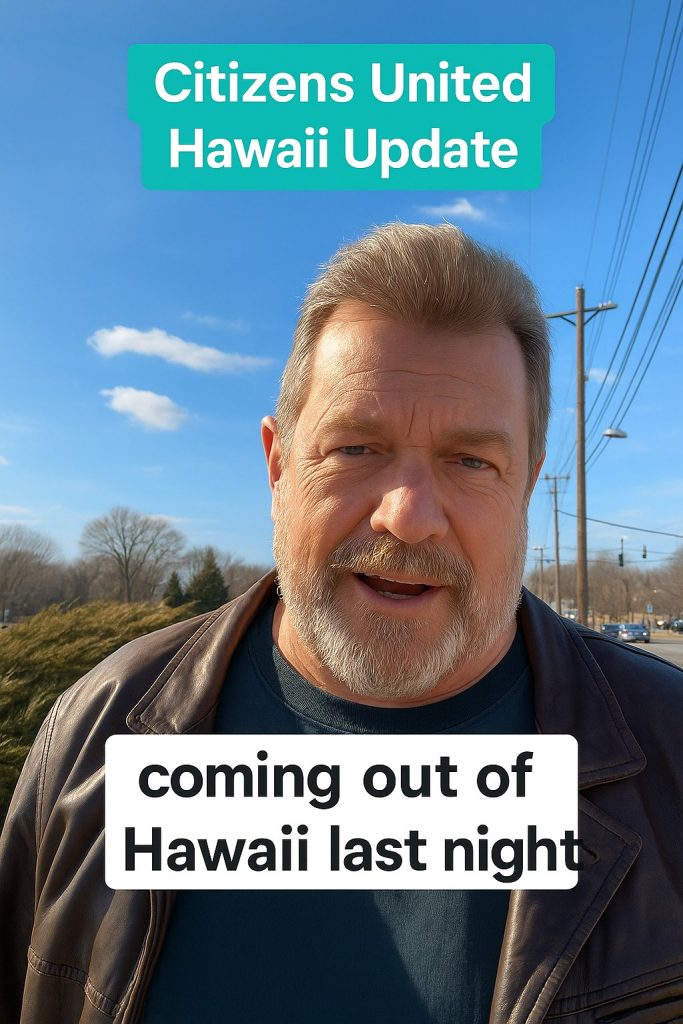
In an unprecedented move that has captured national attention, Hawaii is edging closer to becoming the first state to effectively neutralize the influence of corporate and dark money in its political system. This groundbreaking effort places the Aloha State at the forefront of a growing movement to curb the impact of big money in politics — traveling farther than any other state toward making the landmark Citizens United v. Federal Election Commission ruling effectively irrelevant within its borders.
For over a decade, the 2010 Supreme Court decision in Citizens United v. FEC has shaped the political landscape by affirming corporate entities’ right to spend unlimited funds on political campaigns. Critics argue that this ruling has unleashed a floodgate of untraceable, often “dark” money, distorting democratic processes nationwide. Now, Hawaii may offer a bold blueprint for states seeking to restore transparency and accountability.
The state legislature recently passed a comprehensive campaign finance reform bill designed to dramatically restrict the influence of both corporate donations and untraceable dark money in elections. Among its key provisions are stringent disclosure requirements for all political contributions, caps on certain types of donations, and enhanced public financing options for candidates. If signed into law by Governor Josh Green, this legislation would represent the most far-reaching attempt yet to circumvent the prevailing federal legal framework established by Citizens United.
Supporters of the bill emphasize that the multilayered approach directly targets the loopholes that have allowed vast sums of money to flow through third-party organizations and shadowy channels. “Hawaii is saying loud and clear that money should not buy elections — whether from corporations or shadowy entities hiding behind dark money umbrellas,” said State Senator Maile Shimabukuro, a chief architect of the reform. “We are setting a new standard for democracy in America.”
Opponents of the legislation caution about possible legal challenges, arguing that the restrictions may collide with constitutionally protected free speech rights. However, campaign finance experts note that the bill was carefully crafted with recent judicial trends in mind, seeking to balance transparency and constitutional safeguards. “Hawaii’s approach could withstand judicial scrutiny better than previous attempts because of its focus on disclosure and public engagement,” explains Michael Collins, a constitutional law scholar at the University of Hawaii.
National advocacy groups have hailed the action as a template for other states similarly frustrated by the corrosive role of outside spending in elections. The move underscores a growing realization that states and localities may be the most viable battlegrounds for reform, particularly given the slow pace of change at the federal level.
As the bill moves toward Governor Green’s desk for signature, both proponents and critics alike are watching intently. Should Hawaii succeed, the state could not only reshape its own political landscape but also inspire a wave of reform aimed at dismantling the outsized influence of corporate and dark money across the country.
For now, the nation waits to see if Hawaii’s bold experiment will set a new precedent in the ongoing struggle to reclaim democracy from the shadows of big money.
Where to Learn More
- Hawaii’s Bold Move to Curtail Dark Money in Politics – The New York Times
- Hawaii Sets New Benchmark in Fight Against Dark Money – Campaign Legal Center
- How Hawaii Is Charting a New Course Beyond Citizens United – Vox
- Analyzing Hawaii’s Campaign Finance Reforms – University of Hawaii Law School