
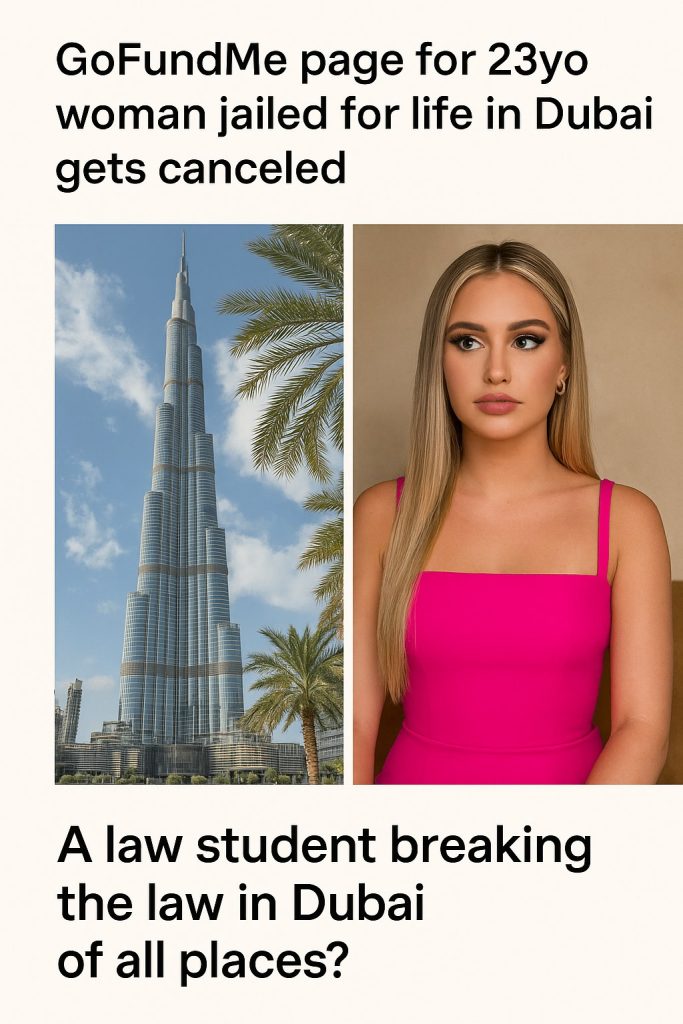
A GoFundMe campaign supporting a 23-year-old woman sentenced to life imprisonment in Dubai has been suddenly canceled, igniting fresh discussions about the complexities of legal advocacy across international boundaries.
The woman, reportedly a law student, was handed a life sentence earlier this year by Dubai authorities following a highly controversial case that has drawn mixed reactions worldwide. The details of her conviction remain closely guarded by the court, but social media and advocacy groups initially rallied around her with a fundraising effort aimed at covering legal fees and supporting her family.
However, the crowdfunding campaign initiated to aid her legal battle was unexpectedly taken down, leaving supporters confused and disappointed. The reasons for the removal have not been explicitly stated by the platform, which generally enforces strict policies on raising funds for legal disputes, especially those involving foreign jurisdictions.
Experts warn that while platforms like GoFundMe offer crucial support to individuals facing legal challenges, fundraising for cases involving international criminal law, particularly in countries with markedly different legal frameworks, can encounter regulatory hurdles. Dubai’s justice system operates under federal laws influenced by Sharia law, which imposes strict penalties in cases involving crimes of a serious nature.
Social media posts and comments surrounding the case reveal a divided public opinion. Some argue that the woman’s sentence is harsh and are calling for international intervention or at least legal assistance, while others emphasize the need to respect the sovereignty of Dubai’s legal system and warn against prematurely judging the facts without full disclosure.
The young woman’s status as a law student has underscored the case’s weight, prompting questions about the nature of the charges and the circumstances that led to such a severe punishment. Observers note that legal professionals engaging in or allegedly breaking laws in regions with strict judicial protocols face daunting consequences, often complicated by the limited diplomatic channels available for expatriates or foreign nationals incarcerated abroad.
Her family members and close supporters have reportedly expressed dismay over the fundraising campaign’s removal, citing it as a vital lifeline to continue pursuing appeal measures or alternative legal strategies. With the GoFundMe page down, they may seek other avenues, including private donations or appeals through legal aid organizations specializing in international cases.
This development raises broader questions about how global fundraising platforms navigate sensitive legal matters and the balance between supporting individuals at risk and complying with international legal norms. It also highlights the challenges faced by people caught in complex legal battles far from home, where public support and timely assistance can significantly influence outcomes.
As of now, no official statements have been released by the woman’s legal team or family regarding the future of their fundraising efforts, and the international community continues watching closely, hoping for a fair resolution to this distressing case.
The incident serves as a reminder of the intricate interplay between law, technology, and activism — especially in an age where social media platforms can amplify voices but also impose limitations shaped by global policies and local laws.