
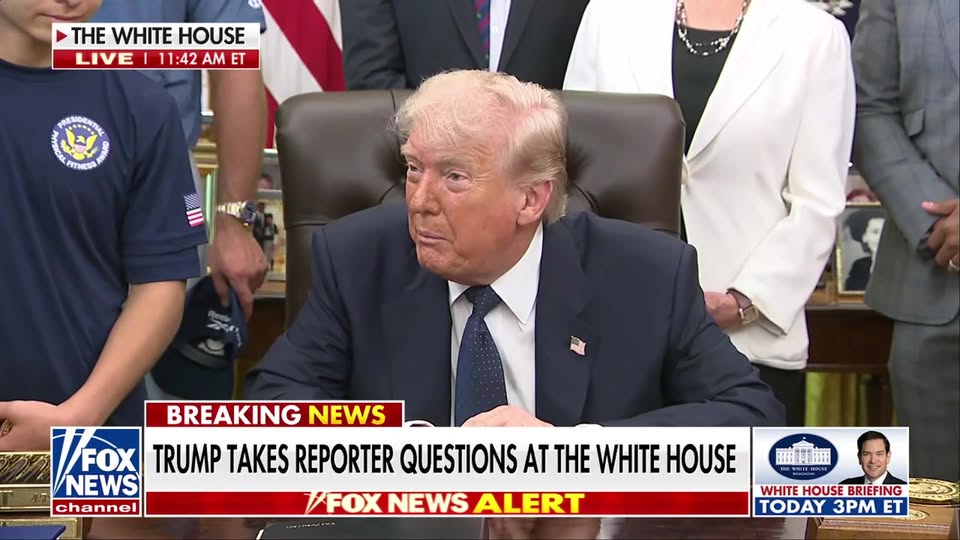
In a recent interview that has sparked widespread discussion, former President Donald Trump hinted at the controversial idea of arming Iranian protesters in their ongoing struggle against the regime. When questioned by a reporter about his stance, Trump responded cautiously, saying, “I don’t want to say that.” However, he did not shy away from highlighting a provocative perspective on the dynamics of protests and armed resistance.
The exchange centered around whether the United States might provide weapons to Iranians seeking regime change. Trump acknowledged the challenges faced by protesters, noting, “People say, ‘why aren’t they protesting?’ They want to protest, but they don’t have any guns.” He further suggested that armed protesters could potentially make a decisive difference, remarking, “You could have 200,000 people protesting and have 5 or 6 sick people with guns.”
He went on to describe the potential consequences of armed confrontation, stating, “When they start shooting them right between the eyes and you see a guy fall and another one fall and you have no guns — very few people would be able to stand there and do it. I mean, I understand it, I tell them not to.”
This candid reflection has resonated deeply across political and social spectrums. Critics argue that Trump’s comments could be interpreted as endorsing foreign intervention or escalating violence, while supporters might see it as a pragmatic acknowledgment of the realities faced by oppressed populations seeking change.
While the former president has not explicitly declared plans to arm protesters, his remarks reignite debates about U.S. foreign policy, leverage in Iran’s internal affairs, and the ethics of arming civilian populations in revolutionary contexts. The situation in Iran remains tense, with mass protests and dissent posing significant challenges to the authoritarian regime—issues that continue to attract global attention.
This exchange underscores the complex morality and strategic considerations involved in international support for protest movements. As the dialogue unfolds, officials and analysts are scrutinizing the boundaries of U.S. involvement and the potential repercussions of such provocative suggestions.