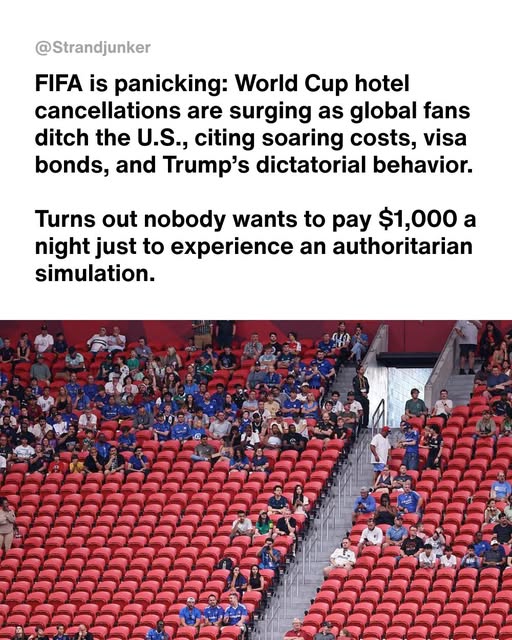
The anticipation surrounding the upcoming FIFA World Cup has taken an unexpected turn as a surge in hotel cancellations across the United States signals mounting frustration among international fans. Social media buzzes with claims that FIFA is “panicking” amid declining ticket and accommodation bookings, with fans citing soaring costs, complicated visa policies, and other logistical hurdles as primary reasons for their retreat.
One viral post from user @Strandjunker amplified concerns, suggesting that “FIFA is panicking: World Cup hotel cancellations are surging as global fans ditch the U.S., citing soaring costs, visa bonds, and Tru.” The post has resonated widely, sparking discussions about the real challenges faced by fans trying to attend the tournament, scheduled to take place in major U.S. cities.
Over recent weeks, online travel agencies and hotel booking platforms have reported a noticeable decline in reservations from international visitors. Industry insiders attribute this trend to multiple factors: ticket prices have increased significantly, hotel rates in host cities are at record highs, and visa procedures have become more cumbersome amid tightening border controls. Many fans are also voicing frustrations over visa bonds and additional requirements that make international travel more complicated and costly.
“Attending the World Cup this year could cost some fans thousands more than just a few years ago,” says travel analyst Mark Reynolds. “Between elevated accommodation costs, visa fees, and flight prices, many fans are reconsidering whether it’s financially feasible to attend, especially with economic uncertainties in many countries.”
This reluctance is translating into tangible impacts: several major hotel chains in host cities report a significant rise in cancellations and a marked drop in reservations. As a result, FIFA is reportedly worried about lower attendance levels, potential tournament revenue losses, and its global reputation. Historically, the World Cup has been one of the world’s most-watched sporting events, drawing millions of fans. A decline in international attendance could have broader implications for the event’s global appeal and economic impact.
Furthermore, visa policies have become an additional thorn in the side of prospective attendees. Multiple countries have imposed stricter visa bonds and lengthy processing times, discouraging casual travel. Countries like India, Nigeria, and Brazil, whose citizens form a significant portion of the global fanbase, are facing increased hurdles, adding to the overall reluctance to commit financially and logistically.
Despite these challenges, FIFA and tournament organizers remain optimistic, emphasizing efforts to streamline visa processes and promote affordable travel packages. However, industry experts warn that unless these issues are addressed swiftly, the tournament’s atmosphere could be notably subdued compared to past editions.
As the countdown to kickoff continues, the world watches to see whether the passion of soccer fans can overcome these logistical and financial obstacles. For now, though, it seems that many are choosing to watch from afar, content to cheer their teams on televisions instead of on-site in the United States.